Last Updated: August 27, 2026
This is the fifth and last article in this series, and writing it changed my mind about the previous four.
At N4, I told you to buy the cheap set, because Sou Matome cost ¥3,190 against Shin Kanzen Master’s ¥6,930. At N3 and N2, I told you price couldn’t decide it, because both series landed within a few hundred yen of each other. At N1 the gap is ¥110 — and the money question stops mattering entirely. Which means something else has to decide, and at this level that something is genuinely different from every rung below.
I’m a native Japanese speaker in Kansai. I have never sat the JLPT and never will. But N1 is the one level where being native gives me something specific to say, and it isn’t flattering to the exam: most N1 grammar is Japanese I read but do not speak. That changes who should buy these books at all.
⚡ Quick Summary
- Price is a dead end at N1. Five volumes each: Shin Kanzen Master ¥7,260, Sou Matome ¥7,150. A ¥110 difference on a ¥7,000 purchase decides nothing.
- The real split is language support. Sou Matome’s N1 Grammar is a 2022 revised edition listed in Japanese and English. Shin Kanzen Master’s N1 Grammar is from 2011, Japanese only, and has no English edition on Amazon Japan at all.
- The Japanese-only book massively outsells the bilingual one — #12 vs #71 in the JLPT category, 529 ratings vs 81. There’s a reason for that, and it does not apply to you if you study alone.
- Self-studying from abroad or from your apartment: start with Sou Matome. Studying inside a Japanese language school, or finishing the last two months before the exam: Shin Kanzen Master.
- Native speaker’s angle: N1 certifies reading, not speaking. If your goal is talking to people in Japan, N1 is the wrong ¥7,000.
Disclosure: This post contains affiliate links, including Amazon Associates links. If you buy through them, AI From Japan may earn a small commission at no extra cost to you. I’m a native speaker and have never taken the JLPT — prices, editions, publication dates, page counts, ASINs, ratings and category rankings are what I verified on Amazon Japan myself on August 27, 2026, and claims about how these books perform for actual test-takers are cited to learners who used them. Read our full Affiliate Disclosure.
Sou Matome N1 Grammar (2022 revised, JP+EN) — ¥1,320 →
(affiliate link — the version with English explanations built in)
What N1 is actually certifying
N1 is the top of the ladder, and the usual description is “near-native.” That’s not quite what it measures. N1 tests whether you can process dense written Japanese — editorials, academic prose, business documents — under time pressure, plus formal listening. What it does not test, at all, is conversation. There is no speaking section and no writing section. You can pass N1 without ever opening your mouth, and plenty of people do.
I’m not saying that to be discouraging — it just determines whether these ¥7,000 sets are the right purchase for you. If you need N1 on paper, for a job application, a graduate programme, or the Japanese immigration points system, buy the books and drill. That’s a clear, correct use of the money. If what you actually want is to talk to your neighbours, an hour a week with a real person will do more for you than either of these series.
The price check that ends the price argument
Every volume, verified on Amazon Japan on August 27, 2026:
| Volume | Shin Kanzen Master N1 | Sou Matome N1 |
|---|---|---|
| Grammar | ¥1,320 | ¥1,320 |
| Vocabulary | ¥1,320 | ¥1,320 |
| Kanji | ¥1,320 | ¥1,320 |
| Reading | ¥1,540 | ¥1,430 |
| Listening | ¥1,760 | ¥1,760 |
| Full set | ¥7,260 | ¥7,150 |
Four of the five volumes are priced identically. The entire difference is ¥110 on the reading book — about the price of a can of coffee from a Japanese vending machine.
Put that next to what I found at N4, where the same two series were ¥3,190 and ¥6,930, and the shape of this ladder becomes clear: the further up you go, the less the publishers differentiate on price, and the more you have to choose on how the book is built. If you came here from a comparison of the lower levels expecting the cheap-versus-thorough framing, drop it. It doesn’t survive at N1.
What the price table hides: one book speaks English, one doesn’t
Here’s the comparison that actually matters, taken from the two Grammar volumes because grammar is where N1 candidates lose points:
| N1 Grammar volume | Shin Kanzen Master | Sou Matome |
|---|---|---|
| Published | June 2011 | May 2022 (revised edition) |
| Listed language | Japanese only | Japanese + English |
| Pages | 180 | 212 |
| Rating | 4.6★ (529 ratings) | 4.6★ (81 ratings) |
| Amazon JP rank (JLPT books) | #12 | #71 |
The Shin Kanzen Master N1 Grammar book on sale today was published in June 2011 and has never been revised. Its Amazon listing gives its language as Japanese, full stop. I searched Amazon Japan for an English edition of it and there isn’t one — a Thai edition exists, but not English.
Sou Matome’s N1 Grammar was reissued in 2022 as a zoho kaitei-ban (増補改訂版, “expanded and revised edition”). Amazon lists its language as Japanese and English. Per the publisher’s own description, the revision added colour, a mock exam, review problems on the seventh day of each week, translated example sentences with fuller explanations, and downloadable audio for the example sentences. The series has translations in English, Chinese and Korean and is explicitly designed so you can work through it alone. There are also dedicated English/Vietnamese editions of the N1 volumes at the same ¥1,320.
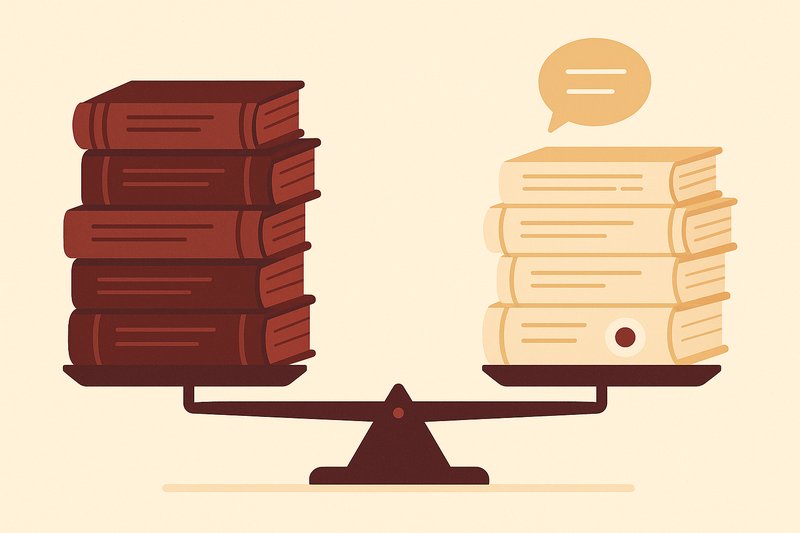
So at N1 you’re not choosing between cheap and thorough. You’re choosing between a 2011 Japanese-only book and a 2022 bilingual one, for the same money. Framed that way it looks obvious. It isn’t quite, and the next section is why.
Why the Japanese-only book is the bestseller anyway
Look at those last two rows again. The 2011 Japanese-only book sits at #12 in Amazon Japan’s JLPT category with 529 ratings. The newer bilingual one sits at #71 with 81. The book with less support for foreign learners is outselling the one with more, by a wide margin.
That looks like a contradiction until you notice who is buying. Shin Kanzen Master is the standard adoption in Japanese language schools here. In a classroom, a Japanese-only book is not a problem — there is a teacher standing three metres away whose entire job is to explain the page. Density is a feature. No English is a feature, because the class is conducted in Japanese anyway.
That’s a real institutional bestseller list, and it isn’t the list you’re on. If you’re studying alone in your apartment at 11pm, “the book Japanese language schools use” is not automatically the book you should use. Take away the teacher and the same density becomes the reason the book stays half-finished on your shelf. English-language comparisons of these two series consistently miss this — they compare the books and forget to compare the situations the books were designed for.
Shin Kanzen Master N1 Grammar — ¥1,320 →
(affiliate link — the language-school standard, if you have a teacher or a study group)
🇯🇵 The native speaker’s angle: N1 grammar is Japanese I read, not Japanese I say
Open the N1 grammar list and you’ll meet patterns like 〜んがため, 〜べからず, 〜きらいがある and 〜をものともせず. I recognise all of them instantly. I have said approximately none of them out loud in my life.
This is where N1 differs from every level below it. N4 grammar is what people say; N3 and N2 add more formal registers. N1 grammar is largely 書き言葉 (kakikotoba) — written language. It lives in newspaper editorials, contracts and government notices. In an ordinary Osaka conversation, using 〜んがため would sound like you were reading aloud from a legal document.
Two practical consequences. One: if you’re studying N1 to sound more natural in conversation, stop and redirect the money. It won’t do that. Two: if you need to read Japanese at a professional level — client emails, a rental contract, a city hall form, academic papers — then N1 is precisely the right target and these books are precisely the right tool. That’s a large, legitimate group of people, and for them ¥7,000 is cheap.
Just be honest with yourself about which group you’re in before you buy. わからへん (wakarahen) — “I don’t get it” in Kansai dialect — will never appear on this exam either, and no amount of N1 study will teach you to say it.
Scorecard
| Category | Shin Kanzen Master N1 | Sou Matome N1 |
|---|---|---|
| Value for money | 4/5 (¥7,260) | 4/5 (¥7,150) |
| Exam realism | 5/5 | 4/5 |
| Usable without a teacher | 2.5/5 | 5/5 |
| Support for English speakers | 1.5/5 (none listed) | 5/5 |
| Freshness of edition | 2/5 (2011) | 4.5/5 (2022) |
| Best as | The final two months | The self-study default |
Which one to buy, by situation
- You’re studying alone, outside a school, and the exam is 4+ months away: Sou Matome. Bilingual, scheduled, 2022 edition. Start here and you’ll actually finish it.
- You’re enrolled at a Japanese language school: Shin Kanzen Master — and check first, because your school may already assign it. Don’t buy a ¥7,260 set twice.
- The exam is 6–8 weeks away and you already have an N2 foundation: Shin Kanzen Master, and skip the rest of this page. Its whole strength is exam-format realism in the final stretch.
- You want the honest best plan and have the budget: Sou Matome first, Shin Kanzen Master last. That’s the sequence experienced learners keep recommending, and at ¥110 apart there’s no financial argument against doing both in order.
- Only one weak section: buy that single volume, not the set. Grammar and Vocabulary are ¥1,320 each in both series — targeted beats complete when you already know where you’re losing points.
- Your goal is conversation, not a certificate: buy neither. Put the ¥7,000 into lessons with a person instead.
Two things worth adding
The Official JLPT N1 Practice Workbook, Volume 2 (公式問題集 第二集) — ¥770, 4.4★, published by the Japan Foundation, the organisation that writes the exam. At ¥770 against a ¥7,000 set, this is the highest-value item on the page. N1’s difficulty is largely about pace, and only real past-format papers under a clock will show you whether yours is good enough.
Shin Kanzen Master Tango N1 — 2,200 Essential Words — ¥1,760, and a separate book from the five-volume set. N1 vocabulary is the section where people run out of runway, and this is a straightforward word list from the same publisher. Buy it only after you’ve sat one official paper and confirmed vocabulary is where you’re bleeding points.
🇯🇵 The Japan-side verdict
From Kansai, after pricing all five rungs of this ladder: at N1, buy Sou Matome if you’re alone and Shin Kanzen Master if you’re not. That’s the whole decision. The ¥110 price gap is noise, both series are genuinely good, and the variable that predicts whether you finish the book is whether someone is there to explain the page when it stops making sense.
Then add the ¥770 official workbook regardless of which one you chose. Every level of this series ends with the same recommendation, and N1 is the level where it matters most — because at the top of the ladder your problem is no longer understanding Japanese. It’s understanding it fast enough. 🤝
If N1 turns out to be a rung too far this year, the level below is here: JLPT N2.
Frequently asked questions
Which is better for JLPT N1, Shin Kanzen Master or Sou Matome?
Neither is better in the abstract — they suit different situations. Sou Matome’s N1 Grammar is a 2022 revised edition with English translations and a fixed daily schedule, which makes it the stronger self-study choice. Shin Kanzen Master’s N1 Grammar dates from 2011, is Japanese-only, and is the standard in Japanese language schools, where a teacher fills the gap. Alone at home, choose Sou Matome; with a teacher or in the final two months before the exam, choose Shin Kanzen Master.
How much do JLPT N1 books cost in Japan?
Verified on Amazon Japan on August 27, 2026: the Shin Kanzen Master N1 set of five volumes totals ¥7,260 (Grammar, Vocabulary and Kanji ¥1,320 each, Reading ¥1,540, Listening ¥1,760). The Sou Matome N1 set totals ¥7,150 (Grammar, Vocabulary and Kanji ¥1,320 each, Reading ¥1,430, Listening ¥1,760). The official practice workbook is ¥770.
Is Shin Kanzen Master N1 available in English?
No. I searched Amazon Japan on August 27, 2026 and found no English edition of Shin Kanzen Master N1 Grammar — a Thai edition exists, but not an English one, and the standard listing gives the language as Japanese only. Sou Matome does have English/Vietnamese editions of its N1 volumes at the same ¥1,320 price.
Do I need both series for N1?
You don’t need both, but the sequence many successful candidates describe is Sou Matome to build the foundation over three or four months, then Shin Kanzen Master in the last one or two months for exam-realistic practice. Since the sets are ¥110 apart, the decision is about study time, not budget. If you only have three months, pick one and finish it.
Will passing N1 mean I can hold a conversation in Japanese?
Not by itself. N1 has no speaking or writing section, and much of its grammar is written language that native speakers rarely say out loud. It’s an excellent certification of reading and listening at a professional level, and it carries real weight for jobs, graduate study and Japan’s visa points system. For conversation you need practice with people, which no textbook on this page provides.
How long does it take to prepare for N1 from N2?
Estimates vary widely and depend on how you passed N2, so treat any single number with suspicion. What’s consistent in learner reports is that N1 requires substantially more reading volume than the jump from N3 to N2 did, and that the limiting factor is reading speed rather than grammar knowledge. Sit an official past paper early, under the real time limit, and let your own score set your schedule rather than someone else’s estimate.
Official JLPT N1 Practice Workbook — ¥770 →
(affiliate link — the cheapest and most useful thing on this page, whichever series you pick)
About the author
I’m Ryuyan Kimura, a content blogger based in the Kansai region of Japan — and a native Japanese speaker. I review AI tools, VPNs, and learning resources for English-speaking expats and Japanese learners. I verify prices, editions and platform details hands-on from Japan wherever I can; for anything I can’t experience myself (like sitting the JLPT), I rely on independent learner reviews and say so in the article.
Want the full story? Read my About page or check our Editorial Standards for how we test products.
Related Articles You Might Find Useful
The complete ladder, bottom to top:
- Genki vs Tobira vs Minna no Nihongo — Best Japanese Textbook in 2026
- Shin Kanzen Master vs Sou Matome for JLPT N4 — The Level That Actually Teaches You Spoken Japanese
- Shin Kanzen Master vs Sou Matome vs TRY! — Best JLPT N3 Books (2026)
- Shin Kanzen Master vs Sou Matome for JLPT N2 — The Level That Gets You Hired
- italki vs Preply vs JapanesePod101 — Which to Buy First for Japanese