Disclosure: This post contains affiliate links to Amazon.co.jp. If you make a purchase through one of the links on this page, AI From Japan may earn a small commission at no additional cost to you. Every textbook on this list is one I either own personally or have used during my own Japanese study journey from Kansai. Read our full Affiliate Disclosure for details on every program we participate in.
Disclosure: This post contains affiliate links. If you purchase through my links I may earn a small commission at no extra cost to you. I only recommend resources I have personally used or deeply researched during my years studying Japanese in Kansai, Japan.
📚 Buy the exact edition (no guessing on Amazon search)
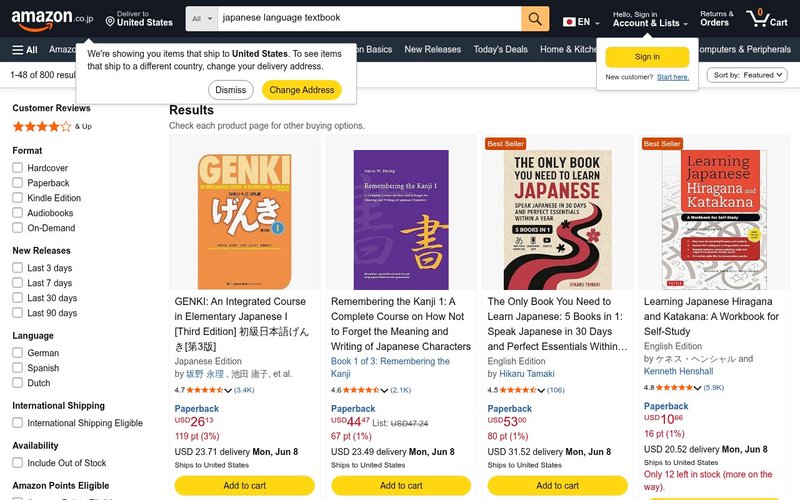
Amazon Japan’s search results mix in workbooks, teacher’s guides and other-language editions that look almost identical. These go straight to the right book:
- Genki I (3rd Edition) — ¥3,960 · Genki II — ¥3,960
- Minna no Nihongo Shokyu I (2nd Edition, main textbook) — ¥2,750 — note a 3rd edition now exists; schools still standardise on the 2nd
- Tobira: Gateway to Advanced Japanese — ¥3,630
Affiliate links — prices verified on Amazon Japan, August 10, 2026.
→ Browse All Three Textbooks on Amazon Japan (Affiliate Link)
Quick Comparison Overview
| Textbook | Best For | JLPT Level | Instruction Language | Self-Study | Approx. Cost (Amazon Japan) |
|---|---|---|---|---|---|
| Genki I & II | Beginners, self-learners | N5–N4 | English + Japanese | ⭐⭐⭐⭐⭐ | ¥3,300–¥4,000/vol |
| Tobira | Upper-intermediate learners | N3–N2 | Japanese + English | ⭐⭐⭐⭐ | ¥4,000–¥5,000 |
| Minna no Nihongo | Classroom / language school | N5–N4 | Japanese only (+ optional English notes) | ⭐⭐ | ¥380+ for full set |
Genki — Best Japanese Textbook for Beginners & Self-Learners
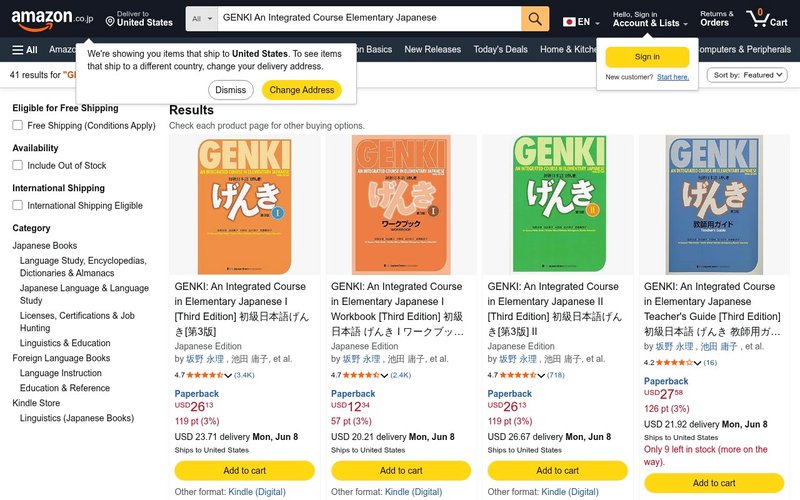
Best for: English-speaking beginners building toward JLPT N5/N4 through self-study, with zero prior Japanese knowledge.
Genki (An Integrated Course in Elementary Japanese), published by The Japan Times, is the most-recommended beginner textbook for English speakers worldwide. Two volumes cover the full beginner range: Genki I takes you through Lessons 1–12 at JLPT N5 level; Genki II (Lessons 13–23) pushes you into N4 territory. The 3rd Edition (2020) added QR-code audio access, updated dialogues, and a cleaner layout.
Each chapter follows a predictable, learner-friendly structure: an opening dialogue featuring university characters like Mary (an American exchange student in Japan), a vocabulary list, clear English grammar explanations, pattern exercises, and kanji practice. That predictability is a feature, not a bug — it removes friction so you can focus entirely on the Japanese.
What Is Included
- Main Textbook — ~300 pages per volume, all grammar explained in English
- Workbook — Sold separately; absolutely essential for grammar consolidation
- Audio Files — Free QR-code download (3rd Edition); all dialogues and listening exercises
- Answer Key — Available as a teacher resource book (sold separately — annoying but available)
- Genki Self-Study Room — Online practice portal at genki.japantimes.co.jp
Ratings
- 🟢 Ease of Use: 5/5
- 🟢 Self-Study Suitability: 5/5
- 🟡 Kanji Coverage: 3.5/5
- 🟢 JLPT N5/N4 Preparation: 4.5/5
- 🟡 Value for Money: 4/5 (workbook + answer key add to total)
Pros
- ✅ All grammar explained in clear English — zero ambiguity for beginners
- ✅ Massive community: Reddit r/LearnJapanese, YouTube courses, free Anki decks
- ✅ Smooth, logical progression from kana through complex N4 grammar
- ✅ ~1,700 vocabulary words and ~300 kanji by the end of Book 2
- ✅ QR-code audio (3rd Ed.) — no need for a CD player
Cons
- ❌ Dialogues are college-campus-heavy — can feel disconnected for adult professionals
- ❌ Workbook and answer key sold separately — adds to overall cost
- ❌ No structured kanji memorization system — you must supplement with Wanikani or RTK
- ❌ Pacing can feel slow and repetitive by Lesson 8 without supplementary immersion
⚠️ Honest Warning: Genki teaches standard Tokyo Japanese (共通語). If you are living in Kansai — Osaka, Kyoto, Kobe, Nara — the locals around you speak Kansai-ben (関西弁), which sounds quite different from everything in the textbook. Do not be surprised if your textbook-perfect Japanese sounds unexpectedly formal to your Osaka neighbors. This applies to all three textbooks on this list.
💡 Pro Tip: Pair Genki with the best AI apps for learning Japanese in 2026 to drill vocabulary and get instant grammar feedback between chapters. Apps like Anki with the official Genki deck, combined with AI conversation practice, dramatically accelerate spoken output beyond what the textbook alone provides.
→ Genki I on Amazon Japan (¥3,960) (affiliate link)
Tobira — Best Japanese Textbook for Bridging Intermediate to Advanced
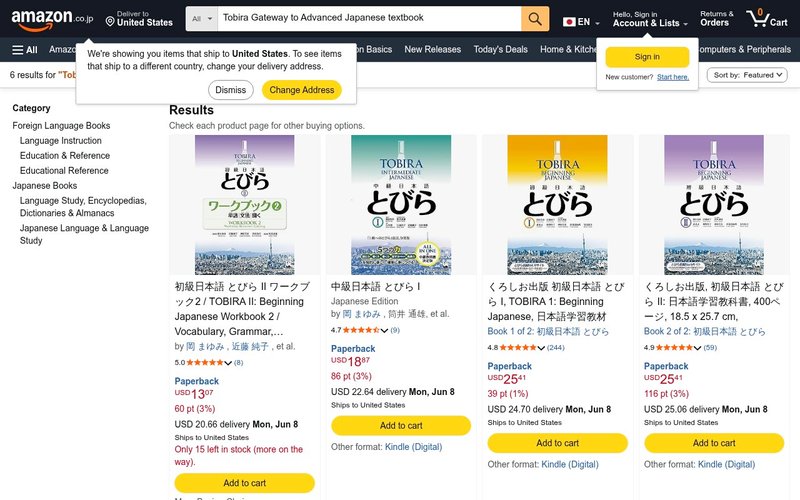
Best for: Learners who have genuinely completed Genki II (or equivalent N4 level) and want to break through the intermediate plateau toward N3–N2 fluency.
Tobira (Gateway to Advanced Japanese), published by Kurosio Publishers, is the textbook most serious learners discover after finishing beginner materials — only to realize authentic Japanese (news, novels, real conversations) still feels impossibly fast. Tobira is designed specifically for that frustrating gap between beginner and advanced. Its 15 chapters are built around culturally rich themes: traditional crafts, contemporary Japan, environmental issues, pop culture — content that feels genuinely relevant to adult learners.
Unlike Genki’s campus dialogues, Tobira’s reading passages are excerpts from newspaper articles, essays, and longer texts. Grammar explanations appear in both Japanese and English, reflecting the assumption that students are past the absolute beginner stage and ready to engage with real Japanese content.
What Is Included
- Main Textbook — 15 chapters with authentic reading passages and cultural notes
- Power Up Your Kanji — Companion kanji workbook sold separately
- Grammar Reference — Integrated within the main text, bilingual
- Audio Files — Downloadable from the publisher’s website (tobiraweb.9640.jp)
- Online Practice Portal — tobiraweb.9640.jp with additional drills and self-tests
Ratings
- 🟢 Intermediate-to-Advanced Bridge: 5/5
- 🟡 Self-Study Suitability: 3.5/5
- 🟢 Authentic Cultural Content: 5/5
- 🟢 JLPT N3/N2 Preparation: 4.5/5
- 🔴 Ease of Entry (for N4-level learners): 3/5 — steep jump
Pros
- ✅ Authentic, culturally rich Japanese texts — feels like real Japan, not a textbook exercise
- ✅ Dramatically improves reading speed and comprehension of native materials
- ✅ Comprehensive kanji coverage building toward N2 requirements
- ✅ Online portal with supplementary exercises and audio
- ✅ Best single resource for transitioning from structured study to immersion-based learning
Cons
- ❌ Steep difficulty jump — not appropriate if you have not finished Genki II or equivalent
- ❌ Much smaller community support than Genki (fewer YouTube series, fewer Anki decks)
- ❌ Grammar explanations assume prior familiarity — less hand-holding than Genki
- ❌ Single-volume format means a higher upfront cost per book
⚠️ Honest Warning: Many learners reach for Tobira too early — immediately after finishing Genki I, or even mid-way through Genki II. This is a mistake. You need to be genuinely comfortable with N4-level grammar before Tobira will make sense. Attempting Tobira too early leads to frustration and abandonment of an excellent resource. Finish Genki II first.
→ Tobira on Amazon Japan (¥3,630) (affiliate link)
Minna no Nihongo — Best for Classroom Study & Language Schools in Japan
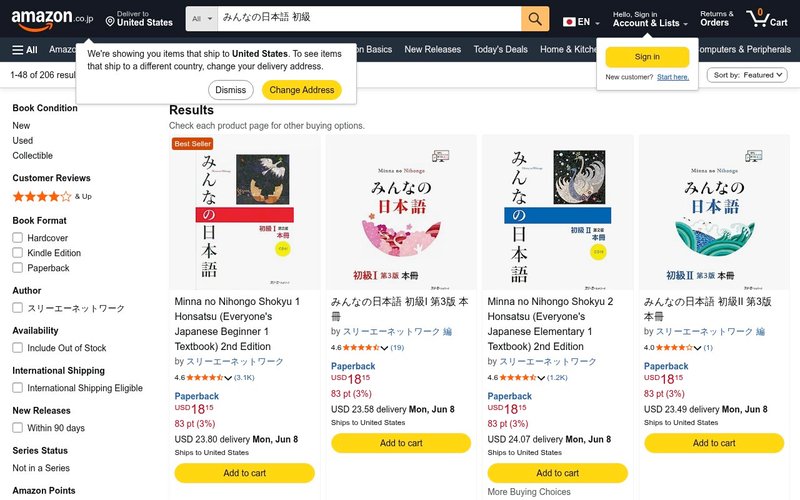
Best for: Learners enrolled in a Japanese language school, studying with a teacher, or who want maximum Japanese immersion from the very first lesson.
Minna no Nihongo (みんなの日本語, meaning Everyone’s Japanese), published by Three A Network, is the textbook at virtually every Japanese language school (日本語学校) in Japan — from Osaka to Tokyo, from Sapporo to Naha. I have sat in trial classes at language schools in Kansai where every single student had the distinctive blue-and-yellow MNN workbook on their desk. There is a reason for that institutional trust.
The main textbook (本冊/Honsatsu) is written entirely in Japanese from page one. No English instructions, no English grammar explanations in the main text. The dialogues, drills, and reading passages are all in Japanese. To understand the grammar, students purchase a separate Translation and Grammar Notes book in their native language — a system that forces genuine engagement with Japanese from the very beginning.
What Is Included (Full Shokyu Set)
- Honsatsu (本冊) — Main textbook entirely in Japanese (Shokyu 1 & 2, 50 lessons total)
- Translation & Grammar Notes — English explanations sold separately
- Standard Workbook (問題集) — Pattern drills and exercises
- Kanji Textbook — Sold separately (recommended)
- Supplementary Workbooks — Reading, writing, vocabulary — each sold separately
Ratings
- 🔴 Ease of Use (Solo Self-Study): 2/5
- 🟢 Classroom Suitability: 5/5
- 🟢 Japanese Immersion Level: 5/5
- 🟢 Real-Life Conversation Relevance: 4.5/5
- 🔴 Value for Money (full supplementary set): 2/5
Pros
- ✅ Maximum Japanese immersion — no English crutch in the main text
- ✅ Industry standard at Japanese language schools — your teacher will know it inside out
- ✅ Dialogues reflect adult, workplace, and formal situations — more realistic than Genki’s campus setting
- ✅ 50 lessons with thorough, systematic grammar coverage at beginner level
- ✅ Available across Japan — every major bookstore and Amazon Japan carries it
Cons
- ❌ Full supplementary set is extremely expensive — easily ¥380 USD equivalent or more
- ❌ Near-impossible to self-study effectively without a teacher guiding pronunciation and drills
- ❌ Requires juggling multiple books simultaneously — main text, grammar notes, workbook
- ❌ Smaller online self-study community compared to Genki
⚠️ Honest Warning: If your plan is to self-study Minna no Nihongo from absolute zero with no teacher support, I would genuinely caution against it. The immersion approach that makes MNN brilliant in a structured classroom can become a frustrating dead-end for solo learners. If you want immersion-style study without a classroom, consider hiring an online tutor — I have reviewed the best online Japanese tutors for 2026 who work specifically with MNN-based curricula.
💡 Pro Tip: If you are based in Kansai and attending a local language school, confirm which edition of MNN they use before buying — the 2nd Edition (2013) is by far the most common in Japanese language schools. Buying mismatched editions means your workbook exercises will not align with classroom lesson numbers.
→ Minna no Nihongo I on Amazon Japan (¥2,750) (affiliate link)
Genki vs Tobira vs Minna no Nihongo — Full Head-to-Head Comparison
| Category | Genki | Tobira | Minna no Nihongo |
|---|---|---|---|
| Target Level | Absolute beginner → N4 | N4 → N2 | Absolute beginner → N4 |
| Instruction Language | English + Japanese | Japanese + English | Japanese only (+ optional English notes book) |
| Self-Study Friendly | ⭐⭐⭐⭐⭐ | ⭐⭐⭐⭐ | ⭐⭐ |
| Classroom Suitability | ⭐⭐⭐⭐ | ⭐⭐⭐⭐ | ⭐⭐⭐⭐⭐ |
| JLPT Target | N5/N4 | N3/N2 | N5/N4 |
| Cultural Content | University / campus life | Rich authentic Japanese culture | Adult workplace & daily Japan |
| Kanji Approach | Gradual — supplementation needed | Comprehensive N2-level coverage | Gradual — supplementation needed |
| Audio Access | Free QR download (3rd Ed.) | Publisher website download | Separate CD or digital download |
| Total Cost Estimate | ~¥15,000–¥20,000 for full set | ~¥4,000–¥5,000 per volume | ¥40,000+ for complete series |
| Online Community | Huge (Reddit, YouTube, Anki) | Moderate | Moderate (strong in Japan) |
| Ideal Learner | English-speaking self-learner anywhere | Post-N4 intermediate serious student | Language school student in Japan |
→ Compare Current Amazon Japan Prices — All Three Textbooks
Buyer’s Guide: Which Japanese Textbook Is Right for You?
The best textbook is not the one with the highest rating — it is the one that matches your specific situation. After years of studying in Kansai and speaking with hundreds of learners at study groups, language exchanges, and language school trial days, these are the patterns I consistently observe.
Choose Genki if you:
- Are starting from absolute zero — no hiragana or katakana yet
- Plan to self-study without a regular teacher or tutor
- Want maximum online community support and free supplementary resources
- Are planning to take JLPT N5 or N4 within the next 1–2 years
- Prefer everything integrated in one book with English explanations as a safety net
Choose Tobira if you:
- Have genuinely completed Genki II or equivalent and feel solid at N4 level
- Want to start reading authentic Japanese texts — news articles, essays, literature
- Are aiming for JLPT N3 or N2 within the next year
- Feel stuck in the intermediate plateau after finishing beginner materials
- Are serious about reaching real conversational and reading fluency
Choose Minna no Nihongo if you:
- Are enrolled in (or planning to enroll in) a Japanese language school in Japan
- Study with a teacher or tutor who follows the MNN curriculum
- Want maximum Japanese-language immersion from day one
- Are learning Japanese for professional or workplace situations in Japan
- Can budget for the full multi-book supplementary system
The Kansai Perspective: What the Textbooks Do Not Tell You
Living in Kansai adds a layer that none of these textbooks address: the regional dialect. Whether you are in Osaka (大阪), Kyoto (京都), Kobe (神戸), or Nara (奈良), you will regularly encounter Kansai-ben (関西弁) that sounds genuinely different from the standard Japanese all three textbooks teach. My honest advice: learn standard Japanese first with any of these three, then allow Kansai-ben to seep in naturally through daily life exposure.
For purchasing in Japan: Kinokuniya (紀伊国屋書店) in Osaka’s Umeda and Shinsaibashi branches stocks all three in-person. But for competitive pricing and fast delivery, Amazon Japan wins — I routinely get same-day delivery to my Kansai address. The affiliate link at the top of this article takes you directly to the current Amazon Japan listings.
If you are supplementing textbook study with digital tools — which I strongly recommend — check out my roundup of AI apps for learning Japanese in 2026. For translation practice between study sessions, I regularly use DeepL and ChatGPT for Japanese translation to cross-check grammar and nuance — both have become genuinely useful study companions.
One honest caveat from years of grinding through these books myself: no textbook — and no app — will teach you to actually speak. If conversation is your goal, pair whichever textbook you choose with a real human tutor and use the book as your lesson material. I compared the main platforms in my guide to the best online Japanese tutors — the short version: italki (affiliate link) is the most flexible place to start, with inexpensive community tutors who are happy to work through Genki or Minna chapters with you.
Alternatives to Genki, Tobira & Minna no Nihongo
These three are the most widely used Japanese textbooks, but they are not your only options. Here are three strong alternatives worth considering:
Japanese from Zero! (JFZ)
A five-book self-study series that starts in romaji and introduces kana gradually — ideal for learners who find Genki too fast or too dry from the start. Each volume integrates the workbook so you do not need to buy separately, which saves money. The downside: JFZ goes lighter on grammar depth and formal sentence structure than Genki, so serious JLPT prep may still require supplementary materials at the N4 stage.
Nihongo So-matome (日本語総まとめ)
A compact, exam-focused series covering N5 through N1, structured by skill: grammar, vocabulary, reading, kanji, and listening in separate volumes. Unlike Genki or MNN, So-matome is designed specifically for JLPT preparation rather than comprehensive language learning from scratch. It is the best supplementary choice for exam drilling alongside any of the three main textbooks, and widely available on Amazon Japan.
An Integrated Approach to Intermediate Japanese
Sometimes called the gentler step between Genki and Tobira, this Japan Times textbook targets the N4–N3 boundary with a more forgiving pacing than Tobira. Reading passages are less dense and more structured than Tobira’s authentic texts, making it a useful option if you feel the Genki-to-Tobira jump is too steep. Available on Amazon Japan alongside the Genki series.
Frequently Asked Questions
Is Genki enough for JLPT N4?
Genki I and II together cover the core grammar and vocabulary required for JLPT N5 and most of N4. To fully prepare for the N4 exam, supplement Genki with a dedicated practice book — Nihongo So-matome N4 or Shin Kanzen Master N4 are the most popular choices for reading comprehension and listening sections that Genki does not drill specifically for exam format.
Can I self-study Minna no Nihongo?
Technically yes — if you also purchase the Translation and Grammar Notes book in English and are highly disciplined. In practice, most self-learners find Genki significantly easier and more effective for solo study. Minna no Nihongo genuinely shines in a structured classroom environment with a teacher. If you want the immersive feel of MNN but without a classroom, consider pairing it with a tutor from the best online Japanese tutoring platforms I have reviewed.
Do I need the Genki workbook?
Yes — the workbook is not optional if you want the grammar to stick. The textbook alone does not provide enough writing and pattern-drill practice. Buy both the textbook and workbook together; Amazon Japan often offers them as a bundle at a slight discount. If you are self-studying, the separate answer key book is also strongly recommended.
Which textbook do Japanese language schools use in Japan?
The large majority of Japanese language schools (日本語学校) in Japan — including schools in Osaka, Kyoto, Tokyo, and Fukuoka — use Minna no Nihongo as their primary beginner textbook. If you are enrolling in a language school in Japan, you can almost certainly expect MNN on your first day. Confirm with your specific school before purchasing anything.
What comes after Tobira?
After completing Tobira (which brings you to approximately N2 level), most advanced learners transition to exam-focused series like Shin Kanzen Master N2 or N1, or move directly to authentic Japanese media: novels (小説), long-form journalism, dramas with Japanese-only subtitles. At that point, you are ready to learn Japanese by using Japanese — which is the goal all along. You can also experiment with AI tools like Gemini or ChatGPT for daily Japanese practice at an advanced level.
Is Genki available to buy in Japan?
Yes. Genki (published by The Japan Times) is available at all major Japanese bookstore chains including Kinokuniya, Maruzen, and Tsutaya. Foreign learners living in Japan can also buy directly through Amazon Japan with fast delivery — often same-day in major Kansai cities like Osaka and Kobe. The Amazon Japan affiliate link in this article takes you directly to the current listings.
Final Verdict: Genki vs Tobira vs Minna no Nihongo
After using all three textbooks during my years of Japanese study in Kansai, here is my honest bottom line: these three textbooks are not competitors — they are a natural progression. The ideal path for most English-speaking learners looks like this:
- Start with Genki I & II — if you are self-studying from scratch anywhere in the world
- Or switch to Minna no Nihongo — if you are attending a Japanese language school in Japan (you may not have a choice)
- Graduate to Tobira — once you have cleared N4 and want to start reading authentic Japanese
If I had to recommend just one textbook for a complete beginner self-studying from zero: Genki, no contest. The sheer volume of free support resources — YouTube courses, Reddit communities, Anki decks, the official self-study portal — make it the most learner-friendly option available anywhere.
If you are already in Japan and enrolled in a language school: Minna no Nihongo is likely already your assigned textbook, and it is excellent in that structured environment. Budget for the supplementary books and let the immersion work for you.
If you have been studying for a year or two and feel stuck: pick up Tobira. Do not keep drilling Genki once you are at N4 — level up. The authentic texts in Tobira will connect your textbook Japanese to real Japanese faster than any amount of additional beginner drilling.
→ Shop Genki, Tobira & Minna no Nihongo on Amazon Japan
Are you currently using one of these textbooks? Which level are you at, and what is working or not working for you? Drop your question or experience in the comments below — I read every one and reply from my little corner of Kansai. 🍜
Related Articles You Might Find Useful
- Shin Kanzen Master vs Sou Matome for JLPT N1 (2026) — The Level Where Price Stops Deciding
- italki vs Preply vs JapanesePod101 (2026) — Should You Pay for a Person or a Curriculum?
- Shin Kanzen Master vs Sou Matome for JLPT N4 (2026) — The Level That Actually Teaches You Spoken Japanese
- Shin Kanzen Master vs Sou Matome for JLPT N2 (2026) — The Level That Actually Gets You Hired
- Shin Kanzen Master vs Sou Matome vs TRY! — Best JLPT N3 Books (2026)
- italki Review for Japanese (2026): A Native Speaker’s Honest Take
- Can ChatGPT Replace a Japanese Tutor? An Honest Answer (2026)
- Best Online Japanese Tutors in 2026 — Honest Picks from a Kansai Local
- AI Tools for Learning Japanese — 7 Apps That Actually Work in 2026
- Does ChatGPT Work in Japan?
- ChatGPT Images 2.0 Review — Is It Worth It for Japanese Users?
About the author
I’m Ryuyan Kimura, a content blogger based in the Kansai region of Japan. I’ve been reviewing AI tools, VPNs, and language-learning resources for English-speaking expats and Japanese learners since AI From Japan launched. Every product on this site is personally tested or researched in depth before I write about it — for textbooks, that means I’ve actually used them during my own ongoing Japanese study.
Want the full story? Read my About page or check our Editorial Standards for how we test products.