Disclosure: This post contains affiliate links. If you make a purchase through one of the links on this page, AI From Japan may earn a small commission at no additional cost to you. I test products hands-on from Kansai wherever I can; for anything I can’t verify myself, I rely on independent tests and real user reports — and I say so in the article. Read our full Affiliate Disclosure for details on every program we participate in.
Last Updated: May 5, 2026 · Reviewed by Ryuyan from Kansai, Japan

⚡ Quick Answer: Best AI Tools for Learning Japanese in 2026
After three years of self-study in Kansai, my top recommendation is to start with ChatGPT for free grammar tutoring at any JLPT (Japanese Language Proficiency Test) level. For kanji and vocabulary memorization, pair it with Anki using AI-powered card-generation plugins. When you need accurate translation help, DeepL remains unbeatable for Japanese.
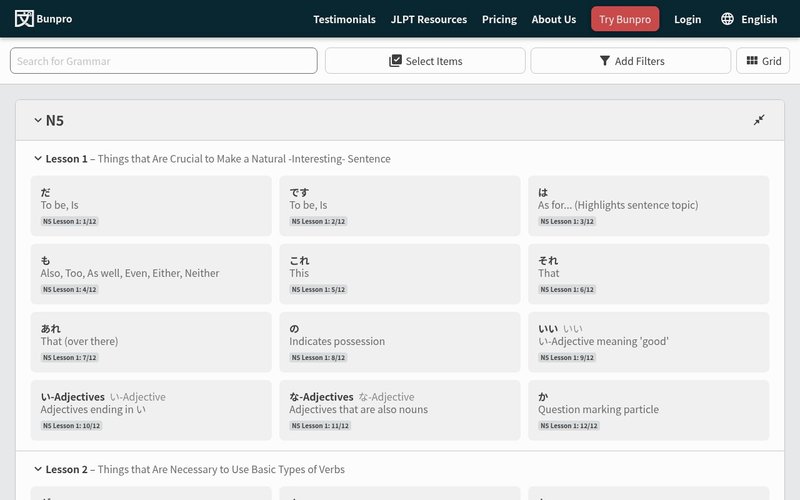
Once you can hold simple sentences, add an AI conversation partner such as Langua for realistic speaking practice, or HelloTalk to chat with native speakers. For habit building, Duolingo works well as a daily warm-up. And if you are studying for the JLPT, Bunpro (from $5/month, with frequent sales) gives the most structured grammar SRS (spaced repetition system) path to N3.
I’ve been learning Japanese seriously since I moved to Kansai three years ago — and I’ve burned time and money on more apps than I care to admit. Some tools genuinely changed how fast I improved. Others were a complete waste of yen.
This guide cuts through the noise. I tested every tool on this list for at least 30 days from real, lived use cases: navigating Osaka’s train system, ordering at restaurants, prepping for JLPT N2, and holding actual conversations with neighbors who speak rapid Kansai-ben (the Osaka-area dialect). No padding, no fluff — just what actually works.
Ready to level up your Japanese? Start with ChatGPT Free and the prompts below (affiliate link) — no credit card needed, and you’ll see results within your first session.
Table of Contents
- Why Use AI Tools to Learn Japanese?
- Quick Comparison Table
- How We Evaluated These Tools
- 1. ChatGPT — Best for Grammar & Conversation Tutoring
- 2. Anki + AI Plugins — Best for Kanji & Vocab SRS
- 3. DeepL — Best for Accurate Japanese Translation
- 4. Langua — Best Dedicated AI Conversation App
- 5. HelloTalk — Best for Real Human + AI Exchange
- 6. Duolingo — Best for Daily Habit Formation
- 7. Bunpro — Best for JLPT Grammar SRS
- Alternatives Worth Considering
- Buyer’s Guide: Choosing the Right AI Tool
- Frequently Asked Questions
- Final Verdict
Why Use AI Tools to Learn Japanese?
Japanese is one of the most difficult languages for English speakers — the Foreign Service Institute ranks it Category IV, requiring roughly 2,200 hours to reach professional proficiency. That’s a daunting mountain. The right AI tools don’t eliminate the climb, but they make every hour count twice as much.
Unlike rigid apps that follow a fixed script, modern AI adapts to your exact mistakes, generates infinite example sentences at your level, role-plays real-world scenarios, and explains grammar rules in plain English. That kind of personalized feedback used to cost ¥3,000 to ¥5,000 per hour for a private tutor.
For those of us living in Japan — or planning to move here — AI tools let you practice the specific vocabulary you actually encounter daily: the post office window, the city hall residency form, the izakaya (Japanese-style pub) where no one speaks English. That real-world specificity accelerates progress faster than any generic curriculum.
Quick Comparison: 7 Best AI Tools for Learning Japanese
| Tool | Best For | Free Plan | Starting Price | Japan Accessible | Our Rating |
|---|---|---|---|---|---|
| ChatGPT | Grammar tutoring, JLPT prep | ✅ Yes | $20/mo (Plus) | ✅ Fully | ⭐ 4.8/5 |
| Anki + AI | Kanji & vocabulary SRS | ✅ Desktop free | ¥4,000 iOS one-time | ✅ Fully | ⭐ 4.7/5 |
| DeepL | Japanese translation | ✅ Yes | ~¥1,280/mo Pro | ✅ Fully | ⭐ 4.6/5 |
| Langua | AI conversation practice | ✅ Limited | $13/mo | ✅ Fully | ⭐ 4.5/5 |
| HelloTalk | Native speaker exchange | ✅ Yes | ¥1,480/mo (~¥825/mo annual) | ✅ Fully | ⭐ 4.3/5 |
| Duolingo | Daily habit building | ✅ Yes | $13.99/mo Super (~$7/mo annual) | ✅ Fully | ⭐ 3.9/5 |
| Bunpro | JLPT grammar SRS | ✅ 30-day trial | $3/mo | ✅ Fully | ⭐ 4.6/5 |
How We Evaluated These Tools
Every tool on this list was tested for at least 30 days from Japan — specifically from Kansai, where I’ve been based since 2023. I evaluated each tool across five criteria: accuracy of Japanese output, JLPT relevance, ease of use for non-native speakers, accessibility from Japan without a VPN, and value for yen.
I also cross-referenced real user reviews from the Japanese App Store and Google Play Japan store, not just US reviews, and consulted feedback from the r/LearnJapanese community and several Discord study groups based in Japan. No sponsored placements influenced these rankings.
1. ChatGPT — Best AI Tutor for Grammar & Conversation Practice
Best for: Grammar correction, JLPT preparation, custom conversation practice at any level from N5 to N1
ChatGPT is the most versatile AI tool for learning Japanese — full stop. I use it every single day: checking a tricky te-form nuance (one of Japanese’s main verb conjugation patterns), practicing keigo (honorific Japanese) before a work email, or role-playing a landlord conversation before I actually have it in real life. The flexibility is unmatched by any purpose-built app.
The free tier (GPT-4o mini) is genuinely capable for language learning when you know how to prompt it correctly. With the right system prompt, ChatGPT becomes a patient, always-available Japanese tutor who never gets frustrated and adapts to your exact JLPT level and goals.
What Makes ChatGPT Exceptional for Japanese
- Infinite flexibility: Practice any topic — rental contracts, hospital appointments, casual Kansai-ben with friends
- Grammar explanations in plain English: Ask why a specific grammar pattern (e.g. ては) is used here and get a contextual, conversational answer
- Keigo correction: Business Japanese is a genuine barrier to working in Japan — ChatGPT handles honorific nuance surprisingly well
- JLPT mock tests: Prompt it to generate N5–N1 reading comprehension passages with questions and explanations
- Sentence correction with reasoning: Paste any Japanese sentence you wrote and ask for corrections with explanations
ChatGPT Pricing (Japan)
- Free: GPT-4o mini — solid for most language study tasks
- Plus: $20/month billed in USD (~¥3,000/month at current rates)
- Pro: $200/month — unnecessary for language learning
💡 Pro Tip: Save this starter prompt: “Act as my Japanese tutor. I’m at JLPT N4 level. Correct any Japanese mistakes I make and explain the grammar rule in simple English. Start with: [your sentence].” This single prompt replaces an hour of paid tutoring and you can use it every day for free.
⚠️ Honest Warning: ChatGPT occasionally hallucinates grammar rules — especially for obscure literary forms, regional dialects, or archaic keigo. Always double-check unusual grammar against a trusted source. For a head-to-head comparison of AI tools available in Japan, see my Gemini vs ChatGPT Japan comparison.
Want to know if the paid tier is worth upgrading to? Read my full ChatGPT Plus review from Japan — I break down exactly what you get for the ¥3,000/month.
2. Anki + AI Plugins — Best for Kanji & Vocabulary SRS
Best for: Memorizing kanji, vocabulary, and set phrases using scientifically proven spaced repetition
Anki has been the backbone of Japanese learning for over a decade, and AI plugins have made it dramatically more powerful in 2026. The spaced repetition system (SRS) ensures you review each piece of vocabulary at the exact moment you’re about to forget it — making every study minute count more than passive re-reading ever could.
The AI magic comes from plugins like AnkiConnect paired with a GPT API key, which let you auto-generate example sentences, furigana readings, audio pronunciation, and contextual clues for any vocabulary you add. What used to take 10 minutes of manual card-building now takes 10 seconds.
What Makes Anki + AI Stand Out
- Auto-generate full example sentences for new vocabulary — no typing, no hunting
- AI explains kanji components and etymology directly inside your flashcard
- Import any Japanese text, manga page, or word list and auto-build a full deck in minutes
- Thousands of free community decks available (Core 2000, Core 6000, Kaishi 1.5k)
Japan-Specific Pricing Note
The desktop version (Windows/Mac) is completely free. The Android version is also free. However, the iOS (iPhone) version costs ¥4,000 — a one-time purchase, which at current exchange rates is roughly $26–$28. This is by far the most common complaint in the Japanese App Store reviews, and it’s legitimate — but remember, it’s a one-time fee, not a subscription.
⚠️ Honest Warning: AI-generated flashcard content can occasionally be inaccurate — especially for nuanced grammar usage or uncommon kanji readings. Always review new AI-generated cards before you drill them into long-term memory. Wrong information in SRS is hard to un-learn.
💡 Pro Tip: Download the free Kaishi 1.5k starter deck — it’s the community consensus pick for beginners and covers the 1,500 most essential Japanese words with audio, example sentences, and kanji breakdowns. It’s the best starting point before you build custom decks.
3. DeepL — Best for Accurate Japanese Translation
Best for: Understanding complex Japanese texts, decoding keigo in official documents and contracts
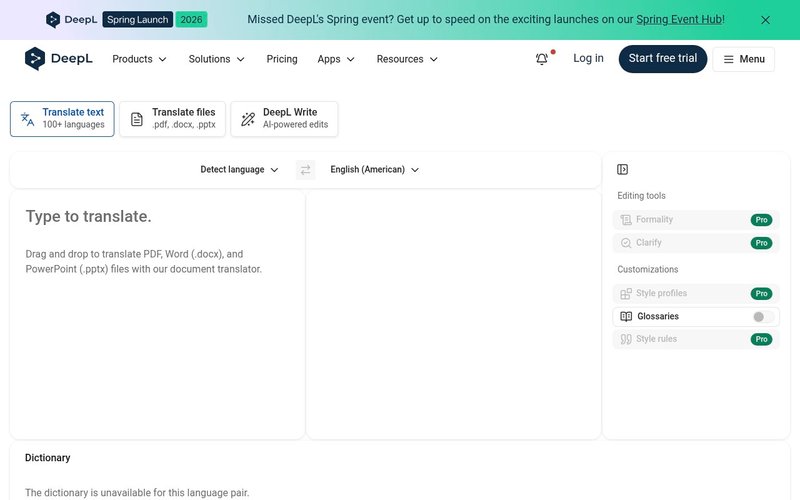
When it comes to Japanese translation, DeepL is in a different league from Google Translate. Its Japanese–English and English–Japanese pairs are consistently the most accurate of any AI translation tool available, with a nuanced grasp of context, formality levels, and implicit meaning that other translators miss completely.
I use DeepL almost daily for reading documents above my current level — apartment contracts, municipal notices, news articles, medical paperwork. It doesn’t just translate words; it captures the register of the original text, which matters enormously in a language where formality is baked into every sentence.
DeepL Pricing for Japan Users
- Free (web): Up to 500,000 characters per month total, but each translation request is capped at 1,500 characters and only one document/month — fine for short-form practice
- Pro Starter: ~¥1,280/month — unlimited translation, Word/PowerPoint document support
- Pro Advanced: ~¥3,800/month — team features, API access, higher priority
⚠️ Honest Warning: Don’t use DeepL as a replacement for understanding — use it as a comprehension check. The fastest way to plateau in Japanese is to translate everything without attempting to parse the grammar yourself. Use it on the 20% that genuinely blocks you, not the 100%.
💡 Pro Tip: When reading a Japanese news article, attempt to understand 80% yourself first. Then use DeepL on only the sentences that truly block comprehension. This 80/20 approach builds reading intuition dramatically faster than full-page translation.
4. Langua — Best Dedicated AI Japanese Conversation App
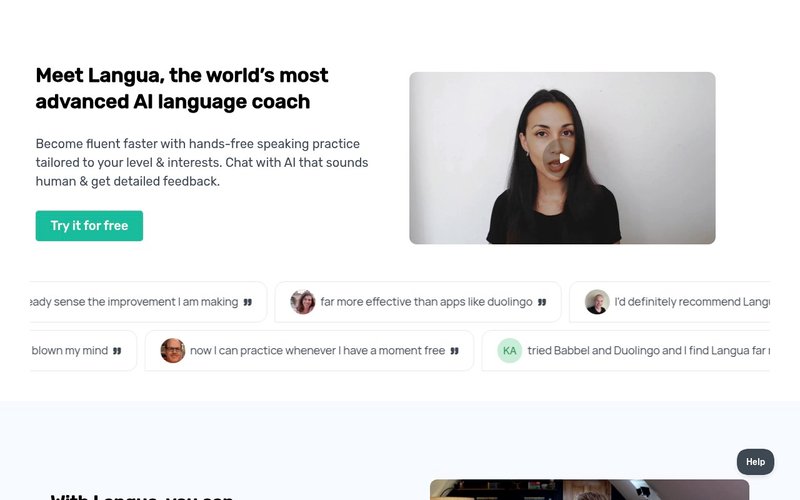
Best for: Realistic AI voice conversation practice with immediate feedback, intermediate to advanced learners
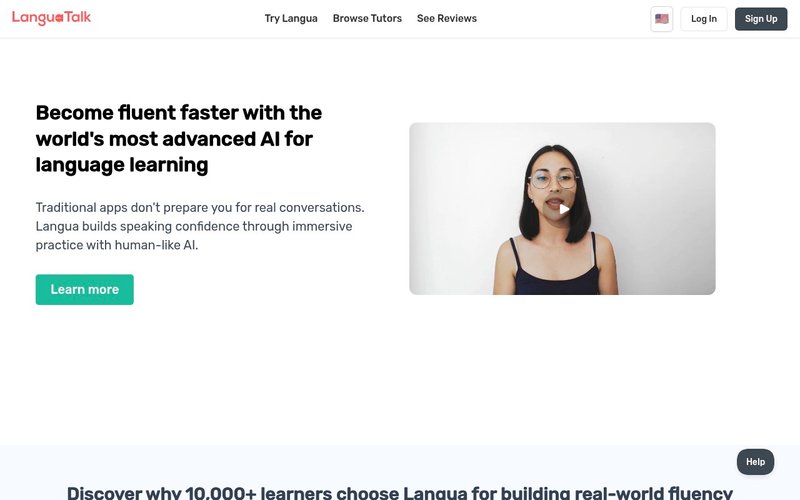
Langua (from the LanguaTalk team) is the best purpose-built AI conversation app for Japanese on the market right now. Unlike ChatGPT’s text-based approach, Langua gives you real voice conversations with AI that actually sounds like a native speaker — because the voices are cloned from real people, not synthesized from scratch.
What I like most is the scenario design. The role-play options cover daily life situations that matter specifically to Japan residents: navigating a post office visit, talking to a landlord about a maintenance issue, discussing your weekend at an izakaya. It’s one of the only apps that feels built for life in Japan, not just tourist phrases.
Langua Features for Japanese Learners
- Furigana (small kana hints above kanji) and romaji (Latin-letter spelling) display toggles — great reading support while you’re still building recognition
- Multiple feedback modes: inline corrections, end-of-session summary report, or verbal repeat-back drills
- Conversation scenarios graded to your JLPT level (N5 through N2)
- Switch to English mid-conversation when you’re stuck — the AI understands and keeps going
Langua Pricing
- Free: Limited access — enough to test the experience before committing
- Standard: ~$13/month — time-limited daily conversation sessions
- Premium: ~$29/month — unlimited 24/7 access with full feature set
⚠️ Honest Warning: Langua’s voice recognition occasionally mishears words, especially when your accent is heavy or you’re using casual speech patterns. This is a current limitation of speech-to-text technology generally, not a Langua-specific flaw. Don’t let occasional misrecognition discourage you — keep speaking.
💡 Pro Tip: Use the daily life scenario packs specifically. As someone who lives in Kansai, I found the practical role-plays (convenience store, train station help desk, doctor’s appointment) far more valuable than open-ended topic discussions. Practice conversations you’ll actually have.
Ready to try AI conversation practice? Try Langua free today (affiliate link) — no credit card required for the trial, and you’ll know within 20 minutes whether it’s worth committing to.
5. HelloTalk — Best for Real Human + AI Language Exchange
Hot tip: HelloTalk is great for casual practice, but if you want structured 1-on-1 lessons with vetted teachers, see our Best Online Japanese Tutors in 2026 guide instead.
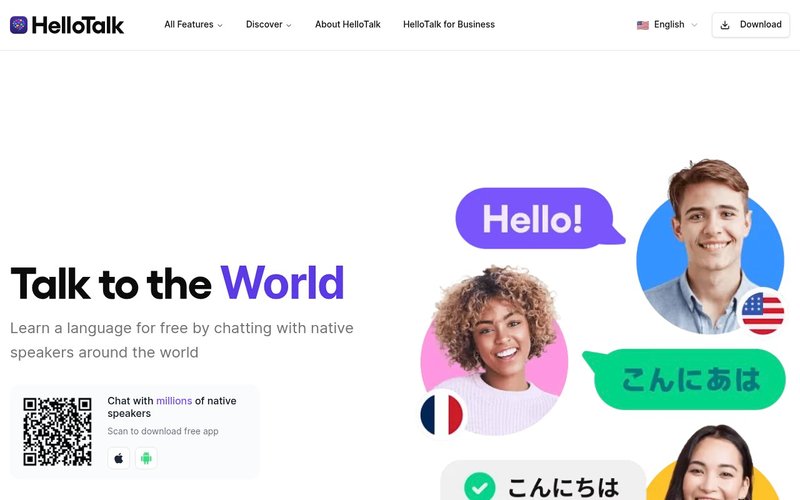
Best for: Connecting with native Japanese speakers for text and voice exchange, with AI correction tools built into every conversation
HelloTalk occupies a unique space in the AI learning landscape: it’s not a pure AI tool, but it uses AI extensively to power real-time grammar corrections, translation overlays, and pronunciation feedback within conversations with actual native speakers. The result is a hybrid experience that gives you the cultural depth of human connection with the speed of AI feedback.
Living in Japan, HelloTalk gave me access to something invaluable: millions of Japanese native speakers who actively want to learn English. The exchange is genuinely symbiotic — they help me with Japanese nuance, I help them with natural English. And the AI correction layer means even my written mistakes get flagged before they become habits.
What Makes HelloTalk Work
- AI grammar correction on any Japanese message you send — flags errors instantly
- Voice message exchange with AI pronunciation scoring and feedback
- Real-time translation toggle within chats — read Japanese naturally, translate only when stuck
- Active Japanese-speaker community — new exchange matches typically respond within hours
HelloTalk Pricing
- Free: One target language, basic AI correction features, some ads
- VIP: ¥1,480/month billed monthly (or ~¥825/month annual) — unlimited languages, full AI correction, no ads, reading level assessment
⚠️ Honest Warning: HelloTalk has a well-documented reputation for attracting users who treat it as a social or dating app rather than a serious study tool. Use the interest filters aggressively to find partners with genuine study goals, and don’t hesitate to politely decline exchanges that drift off-topic.
💡 Pro Tip: Set your profile to indicate your target city or prefecture in Japan. Japanese users respond noticeably faster to partners who show genuine interest in local culture and regional specifics — mention you’re studying Kansai-ben or want to discuss life in your specific city.
6. Duolingo — Best for Daily Habit Formation (Honest Take)

Best for: Absolute beginners building a daily study habit; learning hiragana and katakana; establishing consistency before moving to more rigorous tools
I’m going to be more direct than most reviewers here: Duolingo will not make you fluent in Japanese. But it will do something equally critical in the early stages — it will keep you coming back every day. And daily consistency is the single most powerful predictor of long-term language learning success, more than any specific method or app.
The Japanese course on Duolingo is actually one of their better-constructed offerings. It properly introduces hiragana and katakana before relying on romaji, and the early vocabulary and sentence structures align reasonably well with JLPT N5 content. It gets you moving. Just don’t expect it to get you speaking.
Where Duolingo Shines — and Where It Falls Apart
- ✅ Excellent hiragana and katakana memorization scaffolding
- ✅ Gamification keeps true beginners returning daily (streaks, leagues, XP)
- ✅ Good passive vocabulary exposure for N5 range words
- ❌ Grammar explanations are surface-level or absent entirely
- ❌ Hard plateau around N4 — you won’t reach conversation ability from Duolingo alone
- ❌ Does not teach pitch accent or natural speaking rhythm
Duolingo Pricing
- Free: Ad-supported, limited hearts system (mistakes cost hearts)
- Super Duolingo: $13.99/month billed monthly (or ~$6.99/mo if billed annually) — no ads, unlimited hearts, streak repair
- Duolingo Max: $29.99/month billed monthly (or ~$14/mo if billed annually) — includes AI Roleplay conversation practice feature
⚠️ Honest Warning: A long Duolingo streak does not equal Japanese ability. I’ve met people in Osaka with 500-day streaks who couldn’t order food in Japanese. The streak measures consistency, not comprehension. Use Duolingo as a daily warm-up, then do actual study with Bunpro or ChatGPT immediately after.
💡 Pro Tip: Spend exactly 10 focused minutes on Duolingo each morning as your activation ritual, then immediately switch to Bunpro or a ChatGPT conversation session. This two-step habit primes your brain for Japanese, keeps your streak alive, and ensures you’re doing real study — not just tapping through Duolingo lessons.
7. Bunpro — Best for JLPT Grammar SRS
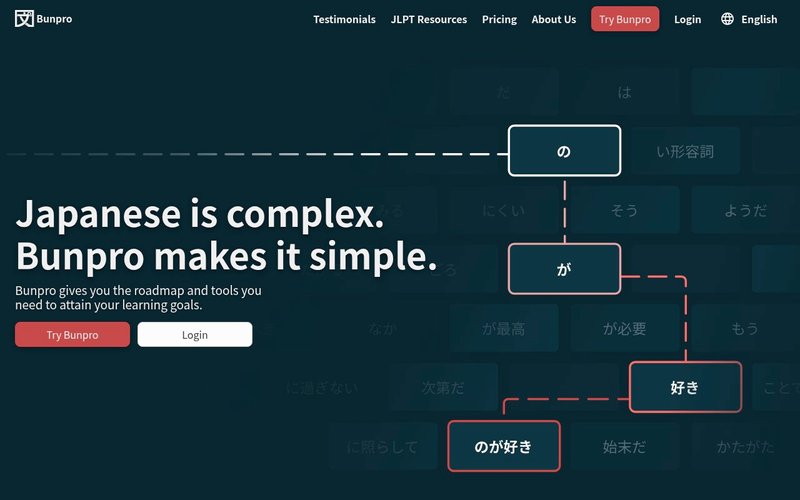
Best for: Structured JLPT grammar study from N5 to N1, intermediate to advanced learners who need systematic grammar coverage
Bunpro is the grammar-focused counterpart to Anki’s vocabulary focus. It applies the same spaced repetition science that makes Anki so effective — but built specifically for Japanese grammar points, sentence patterns, conjugations, and JLPT structures. If Anki builds your vocabulary, Bunpro builds the grammar architecture your vocabulary hangs on.
What makes Bunpro exceptional for Japan residents is its alignment with the JLPT framework — Japan’s official Language Proficiency Test held every July and December across Japan. The N5 through N1 learning paths are organized exactly as the test is structured, which means studying on Bunpro is directly transferable to your exam performance.
What Bunpro Does Exceptionally Well
- AI-generated example sentences in authentic context — not just textbook examples
- Full N5 to N1 JLPT grammar coverage in structured, sequential paths
- Grammar points cross-referenced to major textbooks (Genki, Minna no Nihongo, Human Japanese)
- Community grammar discussions with native speaker clarifications on edge cases
- Cram mode for focused pre-JLPT exam review in the weeks before the test
Bunpro Pricing — Best Value on This List
- Free trial: 30 full days, no credit card required
- Monthly: $5/month — still excellent value (sales reach $4)
- Annual: $50/year ($4.17/month) — our recommended choice (sales reach $40)
- Lifetime: $150 one-time (sales reach $120) — best if you’re in this for the long haul
⚠️ Honest Warning: Bunpro has a real review backlog problem. Miss a week during Golden Week or a busy work period and your SRS queue can explode to 200+ overdue reviews overnight. Set a daily review cap in the settings (I use 50/day maximum) to prevent the dreaded review pile that burns out learners permanently.
💡 Pro Tip: Study one new grammar point in Bunpro each day, then immediately write three example sentences using that pattern in ChatGPT and ask for corrections with explanations. This dual-loop approach — SRS drilling plus generative practice — locks grammar into long-term memory roughly twice as fast as SRS alone.
For complementary tools that help you practice writing longer-form Japanese, check out my roundup of best AI writing tools in Japan — several of them pair surprisingly well with a Bunpro grammar study routine.
Alternatives: 3 More AI Tools for Learning Japanese Worth Knowing
These tools didn’t make my top 7 list, but they serve specific needs that the main lineup doesn’t cover perfectly:
Speechling
Speechling is a pronunciation-focused platform where you record yourself speaking Japanese and receive feedback from either AI scoring or actual human coaches. It’s the most targeted tool available for pitch accent correction and pronunciation refinement. Honest take: Excellent for pronunciation specifically, but offers virtually nothing for grammar or vocabulary. Use it as a specialist supplement once you’re at N4 level or above — not as a primary learning tool. A free tier with limited monthly submissions is available.
Talkpal
Talkpal is a budget alternative to Langua — an AI chatbot that simulates Japanese conversation at a lower price point (approximately $11.99/month). It offers a wider variety of conversation topics and a basic free plan. Honest take: The voice quality is noticeably less natural than Langua, and grammar feedback can be unreliable for complex sentence structures. Adequate for beginners, but intermediate and advanced learners will find the limitations frustrating quickly.
Pimsleur
Pimsleur is an audio-first language learning system with a solid Japanese course, built around spaced repetition of spoken phrases. It’s ideal for commuters in Japan who want to study during the Osaka Metro or Tokyo Yamanote Line ride. Honest take: At approximately $14.95/month, it’s expensive relative to what you get, and it teaches virtually no reading, writing, or kanji recognition. Strong for audio muscle memory; weak for everything else a Japan resident actually needs.
italki — Best 1-on-1 Japanese Tutoring Marketplace
italki is the world’s largest online language tutor platform, with over 4,000 Japanese teachers offering 1-on-1 lessons starting from around $10 per session. You can filter teachers by specialization — JLPT prep, business Japanese (keigo), Kansai-ben dialect, or casual conversation — and most offer a discounted trial lesson before you commit to a regular schedule. Honest take: italki shines as the human complement to AI tools, not a replacement. Use ChatGPT and Bunpro for daily structure and drilling, then book 1–2 italki lessons per week to apply what you’ve learned with a real teacher who can correct pronunciation, explain cultural nuance, and hold you accountable to a study schedule. The combination accelerates fluency dramatically faster than AI alone.
👉 Find a Japanese tutor on italki (affiliate link) — filter by JLPT level and book your first lesson today.
Physical Textbooks Worth Pairing With Your AI Stack
Want a deep comparison? See our dedicated Genki vs Tobira vs Minna no Nihongo — Best Japanese Textbook in 2026 guide — covers which textbook fits your level (beginner, intermediate, classroom), with honest pros/cons after using all three from Kansai.
While the AI tools above accelerate your daily practice, every serious learner I know also keeps at least one physical Japanese textbook on their desk for structured grammar reference. AI is great for adaptive drilling — textbooks are still the best for sequential foundations. Here are the three I personally recommend, and the ones almost every successful learner I know in Kansai uses:
- Genki I (Third Edition) — The textbook used by almost every university Japanese program in the English-speaking world. Covers JLPT N5 grammar comprehensively with clear English explanations and excellent practice exercises. Pairs especially well with ChatGPT for working through additional example sentences. The Workbook companion is worth getting too.
- Minna no Nihongo Shokyu I — The textbook used by most Japanese language schools inside Japan. Slightly more immersive than Genki since the main text is fully in Japanese, with English explanations in a separate Translation & Grammar Notes booklet. Better if you live in Japan and want a textbook designed for classroom-style learning here.
- Tobira: Gateway to Advanced Japanese — The standard intermediate textbook covering JLPT N3–N2 range. Once you’ve completed Genki II or Minna no Nihongo Shokyu II, this is where you bridge into reading real news articles, listening to podcasts, and writing longer texts. Heavy on cultural context.
(Amazon affiliate links — same price as searching directly. I earn a small commission that helps keep this blog running.)
Buyer’s Guide: How to Choose the Right AI Tool for Your Japanese Level
Looking for a real human tutor instead of AI? Check our dedicated Best Online Japanese Tutors in 2026 guide — it covers italki, Preply, Cafetalk, NativeCamp, and Nihongo-Pro with Japan-specific pricing and JST scheduling notes.
The right tool depends entirely on where you are in your Japanese journey, what your specific goals are, and how much you want to spend per month. Here’s how to match your situation to the right stack:
Complete Beginners (Zero Japanese)
Start with Duolingo to build the daily study habit and learn hiragana and katakana in their proper order. Add Anki with the free Kaishi 1.5k deck after two weeks to start building core vocabulary. Hold off on conversation practice until you have around 300–500 words — jumping in too early creates frustration without building confidence.
Elementary to Intermediate (JLPT N4–N3)
This is where AI tools produce the most dramatic results. Use Bunpro for daily grammar SRS, ChatGPT for writing practice and sentence correction, and Langua to push your speaking confidence past the awkward intermediate plateau. At this level, Japanese opens up — push hard here.
Advanced Learners (Targeting N2 or N1)
At advanced levels, ChatGPT Plus paired with native Japanese media (news, light novels, podcasts) becomes your primary study tool, with DeepL for comprehension support on genuinely challenging vocabulary. SRS continues with Anki for domain-specific vocabulary relevant to your work or interests.
Japan Residents Specifically
Living in Japan gives you an immersion advantage no app can fully replicate. Prioritize tools that amplify your daily real-world exposure: HelloTalk for exchanges with actual locals, ChatGPT to debrief and analyze Japanese conversations you had that day, and DeepL for official documents, tax forms, and contracts you genuinely receive as a resident.
Budget Breakdown
- ¥0/month: ChatGPT Free + Anki Desktop + DeepL Free + Duolingo Free — surprisingly effective stack
- ¥500–¥1,000/month: Add Bunpro Monthly ($3) for structured grammar — the highest ROI upgrade available
- ¥3,000–¥6,000/month: Full premium stack: Bunpro Annual + ChatGPT Plus + Langua Standard
Frequently Asked Questions About AI Tools for Learning Japanese
Can I become fluent in Japanese using only AI tools?
Probably not on AI alone — and I want to be direct about this. AI tools accelerate your learning dramatically, but they can’t fully replicate the cultural nuance, spontaneous unpredictability, and emotional depth of real conversation with native speakers. The ideal approach is AI tools for structure and drilling, combined with real conversation. For dedicated 1-on-1 tutoring with a vetted Japanese teacher, italki is my go-to recommendation — you can find native speakers from around $10/lesson, including specialists in JLPT prep, business keigo, and Kansai-ben. Pair italki with HelloTalk for casual exchange, plus language cafes or your own neighbors. AI gets you to conversation level faster; humans carry you to genuine fluency.
Which AI tool is best for JLPT N3 preparation specifically?
Bunpro is the closest thing to purpose-built JLPT preparation — it covers all N3 grammar patterns in a structured, testable format. Pair it with Anki using a dedicated JLPT N3 vocabulary deck, and use ChatGPT to generate N3-level reading passages for comprehension practice. For the listening section, supplement with native Japanese YouTube content — no AI substitute exists yet for natural listening input.
Are these AI tools accessible in Japan without a VPN?
Yes — every tool on this list (ChatGPT, Anki, DeepL, Langua, HelloTalk, Duolingo, and Bunpro) is fully accessible from Japanese IP addresses without any workarounds. No VPN is required for any of them. For other services that may be region-locked in Japan, see my comprehensive Best VPN for Japan guide.
How long does it take to reach JLPT N3 with these tools?
With consistent daily use of ChatGPT + Bunpro + Anki (approximately 1–2 focused hours per day), most adult learners reach solid JLPT N3 level within 18–24 months from zero. Living in Japan with daily immersion alongside this stack can compress that timeline to 12–18 months. In Japan, JLPT tests are offered on the first Sunday of July and the first Sunday of December each year — plan your study schedule backward from your target test date.
Is ChatGPT better than a paid Japanese tutor?
For grammar drilling, vocabulary correction, available-at-2am convenience, and unlimited patience — ChatGPT wins decisively. For cultural nuance, authentic conversational rhythm, and the accountability a human relationship provides — a tutor wins. The setup I’ve found most effective: 30 minutes of ChatGPT written practice daily, plus one 30-minute HelloTalk speaking session per week. For a deeper AI comparison, see ChatGPT vs Claude — which is better for Japanese learners.
Final Verdict: The Best AI Tools for Learning Japanese in 2026
After three years of daily Japanese study in Kansai — and testing every tool on this list under real-life Japan conditions — here’s my honest recommendation by goal:
- 🏆 Best free stack: ChatGPT Free + Anki Desktop + DeepL Free + Duolingo — powerful, costs ¥0
- 🗣️ Best for speaking practice: Langua — the most natural AI voice in any dedicated app
- 📖 Best for translation and reading: DeepL — nothing matches its Japanese accuracy
- 📚 Best for JLPT grammar: Bunpro — structured, affordable, and aligned to the actual exam
- 🎮 Best for beginners: Duolingo — habit formation first, fluency second
- 🤝 Best for Japan residents: HelloTalk — real humans, real Japan, real cultural context
- 👨🏫 Best for serious 1-on-1 tutoring: italki — the human complement to AI, with vetted Japanese teachers from $10/lesson
My honest 2026 recommendation: start with the free stack for 30 days and measure your progress. Then add Bunpro (from $5/month, with frequent sales) the moment you want structured JLPT grammar study. Add Langua only when you’re ready to push speaking specifically. Don’t pay for everything at once — build your stack incrementally as your level demands it.
Whatever tools you choose, consistency beats perfection. Thirty focused minutes of AI-assisted study every day will take you further than occasional weekend marathons. Japan is waiting — let’s get your Japanese there.
Ready to start? Try Bunpro free for 30 days (affiliate link) — no credit card needed, and you’ll identify exactly where your grammar gaps are within the first week. Got questions about any tool on this list? Drop them in the comments below — I personally respond to every question from the community.
Related Articles You Might Find Useful
If this guide was helpful, here are a few more from AI From Japan covering related topics:
- Can ChatGPT Replace a Japanese Tutor? An Honest Answer (2026)
- ChatGPT Images 2.0 Review — Is It Worth It for Japanese Users?
- Is Canva Free in Japan? Honest Guide for Creators Living in Japan (2026)
- Gemini vs ChatGPT — Which is Better for Japan?
- ChatGPT Plus Review — Is It Worth $20 a Month in Japan?
About the author
I’m Ryuyan Kimura, a content blogger based in the Kansai region of Japan. I’ve been reviewing AI tools, VPNs, and password managers for English-speaking expats and Japanese learners since AI From Japan launched. I test products hands-on from real Japanese networks in Kansai (NURO Hikari fiber + ahamo / SoftBank mobile) wherever I can; long-term performance claims are backed by independent tests and real user reports.
Want the full story? Read my About page or check our Editorial Standards for how we test products.