Disclosure: This post contains affiliate links. If you make a purchase through one of the links on this page, AI From Japan may earn a small commission at no additional cost to you. I test products hands-on from Kansai wherever I can; for anything I can’t verify myself, I rely on independent tests and real user reports — and I say so in the article. Read our full Affiliate Disclosure for details on every program we participate in.
Last Updated: April 26, 2026 · Reviewed by Ryuyan from Kansai, Japan
Quick Answer: For most Japanese-English translation tasks in 2026, DeepL wins — it’s faster, more accurate for technical and business documents, and significantly cheaper at $8.74/month. ChatGPT Plus ($20/month) wins when you need creative control, cultural explanation, or multi-step translation-plus-editing workflows. For Japan-based expats, freelancers, and professional translators, DeepL Pro Individual is the better daily driver. Use ChatGPT as a complement — not a replacement.
Living in Kansai, I get asked this question constantly — from expats trying to decode their 賃貸契約書 (chintai keiyakusho / rental contract), to Japanese writers polishing English blog posts before hitting publish. So I put both tools through their paces over several months of real-world use.
I tested them on business emails, technical specs (仕様書 / shiyosho), formal apology letters (詫び状 / wabi-jo), casual Instagram captions, and even a few housing documents from my Osaka apartment search. The results weren’t always what I expected.
This guide covers translation accuracy, keigo (Japanese honorific/polite-speech system) handling, pricing in real terms, document support, and my honest recommendation for each type of Japan-based user.
Want to try the winner right now? Start with DeepL free — no credit card needed → (affiliate link)
Table of Contents
- DeepL for Japanese Translation — Full Review
- ChatGPT for Japanese Translation — Full Review
- DeepL vs ChatGPT — Head-to-Head for Japanese
- Japan-Specific Considerations: Keigo, Business Docs & Privacy
- Alternatives to DeepL and ChatGPT
- Buyer’s Guide — Which Tool Fits Your Japan Workflow?
- Final Verdict
- Frequently Asked Questions
DeepL for Japanese Translation — Full Review
Best for: Freelance translators, Japan-based expats, and businesses that need consistent, reliable J-E document translation without a steep learning curve.
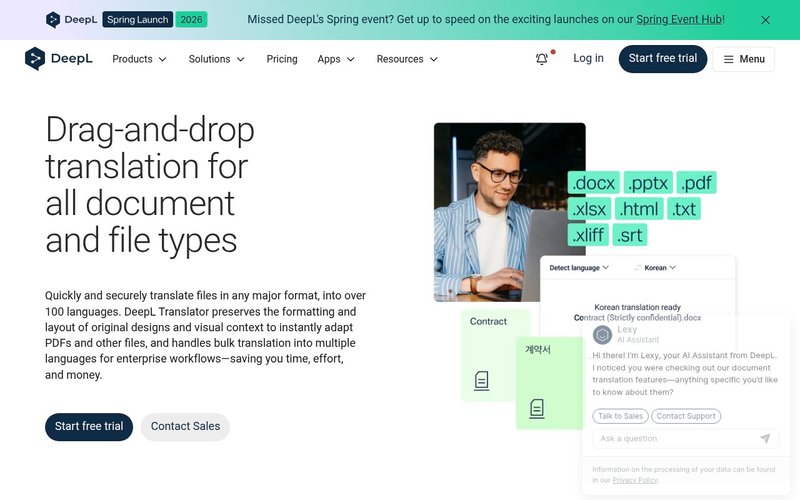
DeepL launched Japanese language support in 2020 and quickly became the default tool for professional J-E translation in Japan. I use it almost every day — for client emails, official notices (お知らせ), product listings, and anything where accuracy matters more than creativity.
The core advantage DeepL has over ChatGPT for translation is simple: it was built specifically for translation. Its dedicated neural translation model doesn’t hallucinate, doesn’t add unsolicited commentary, and produces consistent output every single time you paste the same input.
DeepL Feature Ratings for Japanese
| Feature | Score | Notes |
|---|---|---|
| Translation Accuracy | ⭐⭐⭐⭐⭐ (4.8/5) | Best-in-class for J-E technical and business content |
| Ease of Use | ⭐⭐⭐⭐⭐ (4.9/5) | Paste and go — no prompting required |
| Japanese Language Support | ⭐⭐⭐⭐⭐ (4.7/5) | Formality toggle, glossary, kanji (Chinese characters) and kana (hiragana + katakana) all handled well |
| Document Translation | ⭐⭐⭐⭐ (4.5/5) | Word, PDF, PPT with formatting preserved (paid plans) |
| Pricing Value | ⭐⭐⭐⭐ (4.0/5) | Free plan limited; Individual plan is strong value |
Key Features That Matter for Japanese Translation
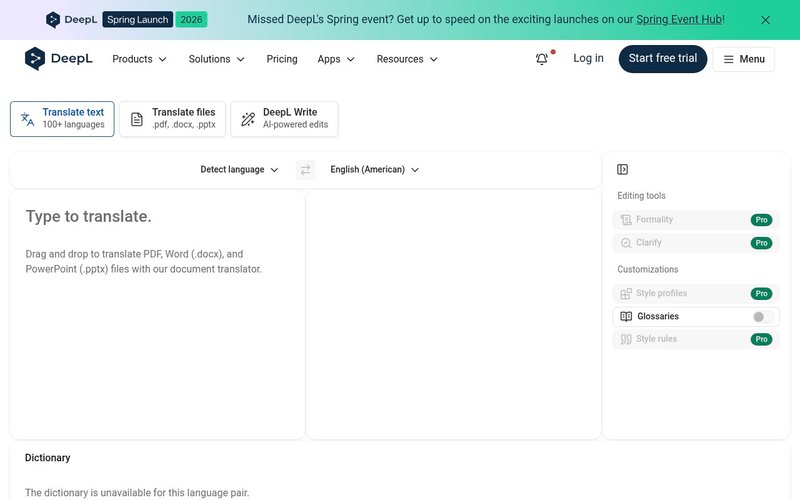
- Formality toggle: Switch between formal (丁寧語 / teineigo) and informal Japanese output. Essential for matching the right register for business vs. casual content.
- Glossary support: Define custom term pairs so DeepL consistently handles product names, honorific titles, and brand-specific vocabulary.
- Document translation: Upload Word, PDF, and PowerPoint files and receive back a translated version with the original formatting intact — a huge time-saver for Japan-based expats dealing with government forms or insurance documents.
- DeepL Write: A separate AI writing assistant for polishing drafts (English and German only currently — no Japanese writing support yet).
- API and CAT tool integration: Integrates with Trados, Phrase TMS, and memoQ for professional translation workflows.
💡 Pro tip: Set up a DeepL glossary with your client’s preferred term translations before starting a new project. For recurring work with Japanese companies, this alone can cut your post-editing time by 30–40%.
⚠️ Honest warning: DeepL’s free web interface caps individual translations at 1,500 characters. For a full apartment lease or business contract, you’ll hit that limit on the first page. I learned this the hard way when I was trying to decode my Osaka rental agreement.
DeepL Pricing (2026)
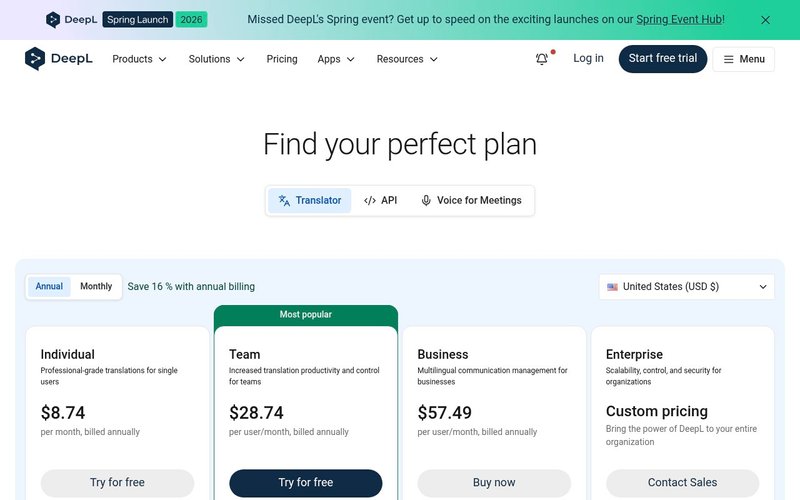
| Plan | Price (Annual) | Monthly Price | Characters/Month | Docs/Month |
|---|---|---|---|---|
| Free | $0 | $0 | 50,000 | 1 (5MB max) |
| Individual | $8.74/mo | $10.49/mo | 300,000 | 3 (30MB max) |
| Team | $28.74/user/mo | — | 1,000,000/user | 20 (30MB max) |
| Business | $57.49/user/mo | — | Unlimited* | 100 (30MB max) |
*Fair usage policy applies. Annual billing required for Team and Business plans.
💡 Japan note: DeepL bills in USD but accepts Japanese credit cards. The Individual plan works out to roughly ¥1,300/month at current exchange rates — less than a Starbucks latte in Shinjuku (a major Tokyo district). Data security (your text is deleted immediately after translation) is included on all paid plans.
DeepL — Pros and Cons
- ✅ Best raw accuracy for Japanese ↔ English translation
- ✅ Formality toggle for Japanese output
- ✅ Consistent, non-hallucinating output every time
- ✅ Document translation with formatting preserved
- ✅ Glossary support for custom terminology
- ✅ CAT tool integration for professional workflows
- ❌ Keigo nuance often requires human post-editing on formal texts
- ❌ Free plan’s 1,500-character-per-translation cap is frustrating
- ❌ No conversational memory or multi-step instruction support
- ❌ Cannot explain cultural context or justify translation choices
ChatGPT for Japanese Translation — Full Review
Best for: Writers, bloggers, content creators, and Japan-based professionals who need translation plus editing, tone adjustment, or cultural context — all in one conversation.
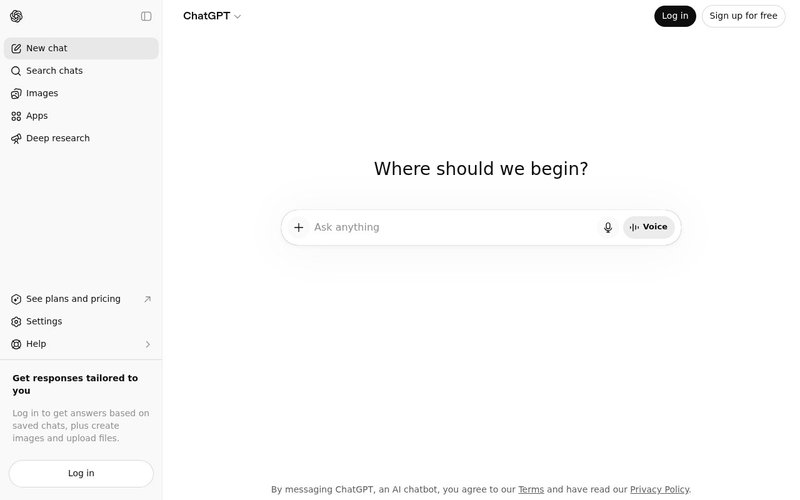
ChatGPT was never designed as a dedicated translation tool, but GPT-5.5 (the current ChatGPT Plus model as of April 2026) handles Japanese-English translation remarkably well — especially when you give it clear instructions. The key advantage over DeepL is flexibility: ChatGPT can translate, explain, rewrite, and reformat in a single workflow.
I use ChatGPT when I encounter a keigo phrase I don’t fully understand — not just to translate it, but to grasp the intent. “ご確認のほどよろしくお願い申し上げます” — DeepL gives a clean literal output, while ChatGPT can explain the register, the implied relationship, and suggest several natural English equivalents.
ChatGPT Feature Ratings for Japanese Translation
| Feature | Score | Notes |
|---|---|---|
| Translation Accuracy | ⭐⭐⭐⭐ (4.3/5) | Strong, but output varies significantly with prompt quality |
| Ease of Use | ⭐⭐⭐⭐ (4.5/5) | Conversational, but requires prompting discipline |
| Japanese Language Support | ⭐⭐⭐⭐ (4.2/5) | GPT-4o/5 struggles with complex keigo negative structures |
| Document Translation | ⭐⭐⭐ (3.5/5) | File upload works; no formatting preservation |
| Pricing Value | ⭐⭐⭐ (3.5/5) | $20/mo is expensive if used only for translation |
Key Features for Japanese Translation
- Prompt-guided tone control: Instruct ChatGPT to translate in “formal business keigo,” “casual spoken Japanese,” or “native-sounding American English” and it adapts accordingly.
- Cultural explanation mode: Ask it to explain why a phrase is polite, how to render 空気を読む (“reading the room”) naturally, or what the subtext of a hedging phrase implies.
- Multi-step translation workflows: Translate a Japanese email, then ask ChatGPT to make it 20% shorter, then convert it to bullet points — all in one conversation.
- File upload (Plus only): Upload PDF or Word files. Returns plain-text translation — no formatting preservation, but useful for getting the content quickly.
- Custom Instructions: Set persistent rules like “when translating Japanese business emails, always use formal British English” so every session starts with the right context.
⚠️ Honest warning: 2026 benchmark data shows GPT-4o achieves only 0.29 accuracy on Japanese negative-question politeness structures — the subtlest form of keigo. Without explicit prompt guidance, ChatGPT can produce translations that are grammatically correct but tonally wrong. For investor reports, executive apologies (詫び状), or any document where the keigo register is legally or socially significant, always have a native reviewer check the output.
I tested this: pasting “ご確認いただけますでしょうか” into ChatGPT without any prompt guidance returned “Could you please confirm?” — correct, but flat. A targeted prompt (“translate as formal Japanese business English, preserving the deference of sonkeigo”) returned something much closer. DeepL got closer on the first try without any prompting.
For more on how ChatGPT performs in Japan, see my ChatGPT Plus review from Japan and Does ChatGPT Work in Japan?
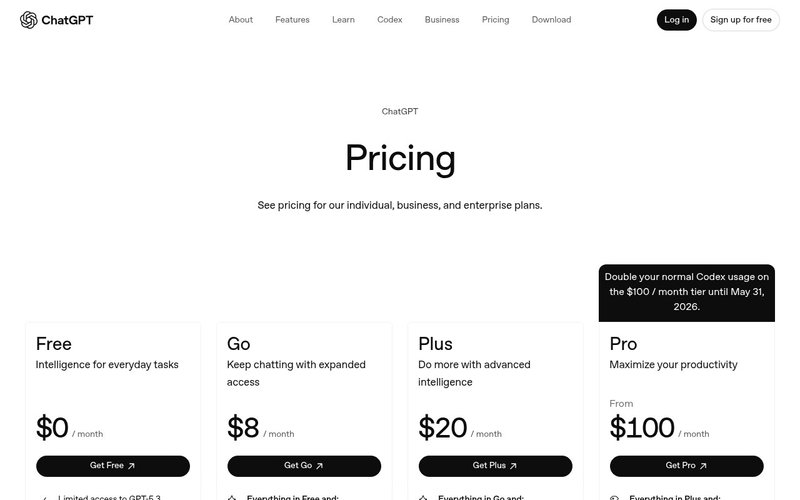
ChatGPT Pricing (2026)
| Plan | Price | Model | Best For Translation |
|---|---|---|---|
| Free | $0/month | GPT-5.3 (limited msgs) | Occasional lookups, quick translations |
| Go | $8/month | GPT-5.2 Instant | Light translation + basic chat |
| Plus | $20/month | GPT-5.5 (latest) | Daily professional translation + writing |
| Pro $100 | $100/month | GPT-5.5, 5× usage | Heavy research and parallel workloads |
ChatGPT — Pros and Cons for Japanese Translation
- ✅ Flexible, nuanced translation with the right prompts
- ✅ Explains cultural context, keigo register, and subtext
- ✅ Multi-step workflows (translate → edit → reformat in one session)
- ✅ Custom Instructions for persistent style rules
- ✅ Useful for far more than just translation
- ❌ Output inconsistency without consistent prompting discipline
- ❌ Struggles with complex keigo structures without explicit guidance
- ❌ No document formatting preservation
- ❌ $20/month is poor value if translation is your only use case
DeepL vs ChatGPT — Head-to-Head for Japanese
Here’s the direct comparison across the criteria that matter most for Japanese-English translation work in Japan in 2026:
| Criteria | DeepL | ChatGPT Plus | Winner |
|---|---|---|---|
| Raw Translation Accuracy | ⭐⭐⭐⭐⭐ (4.8) | ⭐⭐⭐⭐ (4.3) | 🏆 DeepL |
| Keigo Handling | Literal, needs post-edit | Better with good prompts | 🤝 Tie |
| Business Document Translation | ⭐⭐⭐⭐⭐ | ⭐⭐⭐ | 🏆 DeepL |
| Creative / Marketing Copy | ⭐⭐⭐ | ⭐⭐⭐⭐⭐ | 🏆 ChatGPT |
| Speed | ⭐⭐⭐⭐⭐ (instant) | ⭐⭐⭐⭐ (seconds) | 🏆 DeepL |
| Ease of Use | ⭐⭐⭐⭐⭐ (paste and go) | ⭐⭐⭐⭐ (needs prompts) | 🏆 DeepL |
| Entry-Level Price | $8.74/month | $20/month | 🏆 DeepL |
| Document Formatting Preserved | ✅ Yes (paid) | ❌ No | 🏆 DeepL |
| Multi-task Beyond Translation | ❌ Translation only | ✅ Writing, editing, research | 🏆 ChatGPT |
| Cultural Context Explanation | ❌ No | ✅ Yes | 🏆 ChatGPT |
Score: DeepL 6/10 criteria, ChatGPT 3/10, Tie 1/10. DeepL dominates pure translation. ChatGPT wins on versatility and contextual depth.
If you’re comparing ChatGPT to other AI tools for Japan workflows, also check my Gemini vs ChatGPT Japan comparison and the ChatGPT vs Claude deep-dive.
Convinced DeepL is worth trying? Get started with DeepL for free → (affiliate link)
Japan-Specific Considerations: Keigo, Business Docs & Privacy
Keigo (敬語) — The Make-or-Break Factor for Professional Translation
Japanese honorific language has three core levels: 丁寧語 (teineigo — polite), 尊敬語 (sonkeigo — respectful toward the listener), and 謙譲語 (kenjougo — humble about oneself). Mistranslating the register isn’t just a grammar error — it’s a social misstep that can damage professional relationships in Japan’s relationship-driven business culture.
2026 benchmark data shows GPT-4o achieves only 0.29 accuracy on Japanese negative-question politeness structures — one of the most nuanced keigo forms. DeepL handles the literal rendering more reliably but often flattens hierarchical nuance in formal corporate contexts, requiring post-editing for investor communications and executive correspondence.
My recommended hybrid workflow for keigo-heavy content: Use DeepL for an accurate first draft → refine with a specific ChatGPT keigo prompt (“translate as formal kenjougo addressing a client superior”) → final review by a native Japanese speaker. This three-step approach produces the most polished results.
Business Japanese Document Types
For documents like 稟議書 (internal approval requests), 議事録 (meeting minutes), 仕様書 (technical specifications), and 契約書 (legal contracts), DeepL consistently outperforms ChatGPT. Its literal approach is exactly what you want for technical and legal content — where fidelity to the source text matters more than creative flourish.
I’ve used DeepL to translate several housing documents and client contracts from Japanese to English. The output is reliable enough for comprehension — though I always recommend using a certified translator (翻訳士) for anything legally binding in Japan.
Data Privacy Under Japan’s 個人情報保護法
⚠️ Critical warning for Japanese business users: DeepL’s free plan may use your translated text to train its models. Paid plans (Individual and above) include immediate deletion after translation — your data is never stored. ChatGPT similarly retains conversation data by default unless you disable memory and training data collection in Settings.
For anyone in Japan translating NDA-protected content, 個人情報 (personal data), or confidential client materials, use a paid DeepL plan with data security active. Japan’s 個人情報保護法 (Personal Information Protection Act), updated in 2022, imposes strict obligations on how businesses handle personal data — including data processed by third-party AI tools. This is non-negotiable for corporate compliance.
Alternatives to DeepL and ChatGPT for Japanese Translation
Neither tool is perfect for every situation. Here are three alternatives worth knowing in 2026:
1. Google Translate — Free but Lower Accuracy
Google Translate is universally available, works offline on mobile, and is completely free. Its Japanese accuracy has improved with neural models, but it still lags behind DeepL for formal and technical content. Best for reading signs, menus, and casual text — not for business documents or professional work.
2. Claude AI — Best for Long-Form and Nuanced Content
Claude (from Anthropic) maintains coherence over long documents better than ChatGPT in several independent tests, making it useful for translating book chapters, long-form articles, or multi-section reports. It also handles subtext and hedging language with more stability. For a detailed comparison, see our ChatGPT vs Claude guide, and check Is Claude AI Available in Japan? for current access details.
3. Microsoft Translator / Azure AI Translator — Enterprise Option
For large organizations in Japan needing scalable, API-driven Japanese translation with enterprise security and Microsoft 365 integration, Azure AI Translator is a serious DeepL competitor. Pricing is usage-based and competitive at volume. Individual users will find it overkill — DeepL or ChatGPT serves most personal and freelance needs well.
Buyer’s Guide — Which Tool Fits Your Japan Workflow?
Use this framework to pick the right tool based on your actual situation in Japan:
| Your Situation | Best Tool | Recommended Plan |
|---|---|---|
| Expat reading Japanese official documents | DeepL | Free → Individual ($8.74/mo) |
| Freelance J-E/E-J translator (daily use) | DeepL Pro | Individual or Team |
| Japanese content creator writing in English | ChatGPT | Plus ($20/mo) |
| Marketing copy with Japanese source text | ChatGPT | Plus ($20/mo) |
| Business: contracts, specs, compliance docs | DeepL Pro | Individual+ (data security on) |
| Occasional personal use (menus, signs, forms) | Google Translate or DeepL | Free tier |
| Translation + writing + editing combo | Both tools | DeepL free + ChatGPT free to start |
My honest take from Kansai: Most people living and working in Japan benefit from having both tools. Start with DeepL free for daily J-E translation, and use ChatGPT (even the free tier) when you need cultural context or creative rewriting. The two tools complement each other naturally.
If your translation volume is high enough to justify a paid plan, DeepL Individual at $8.74/month is the best pure-translation value available in Japan in 2026. ChatGPT Plus at $20/month is worth it only if you’re also using it for drafting, editing, and research — not translation alone.
For more on building an AI productivity stack in Japan, see Best AI Productivity Tools for Japan and Best AI Writing Tools in Japan.
Final Verdict — DeepL vs ChatGPT for Japanese Translation
After months of real-world testing across business documents, keigo-heavy emails, technical specs, and creative copy — here is my honest final verdict:
| Category | DeepL | ChatGPT Plus |
|---|---|---|
| Best overall for Japanese translation | ✅ Yes | ❌ Not as a dedicated translation tool |
| Best for casual daily use | ✅ Free plan | ✅ Free plan (limited messages) |
| Best for professional translators | ✅ DeepL Pro | ⚠️ Supplement only |
| Best for content creators | ⚠️ Limited creativity | ✅ ChatGPT Plus |
| Best value for translation | ✅ $8.74/month | ❌ $20/month is expensive for translation alone |
| Best for understanding keigo nuance | ⚠️ Literal only | ✅ With good prompts |
My recommendation: Choose DeepL as your primary translation tool if you’re in Japan and need reliable, fast, accurate J-E output. Its consistent quality, document translation support, and lower price make it the clear winner for most use cases.
Choose ChatGPT Plus if you’re a writer, blogger, or marketer who needs translation as part of a broader content creation workflow — and who already uses ChatGPT daily for other tasks. The $20/month is justified when translation is 20% of what you’re doing, not 100%.
Many professionals I know in Japan use both: DeepL for the first draft, ChatGPT for refining tone and adapting cultural nuances. That hybrid approach often delivers the best results of all.
Ready to start translating smarter? Try DeepL free today — upgrade when you need it → (affiliate link)
Frequently Asked Questions
Is DeepL better than ChatGPT for Japanese translation?
Yes, for most translation tasks. DeepL produces more consistent, accurate Japanese-English output without requiring complex prompts. ChatGPT is more flexible and context-aware, but it needs careful prompting to match DeepL’s baseline translation quality for business and technical content.
Can ChatGPT translate Japanese to English accurately?
Yes, with the right prompts. GPT-5.5 (ChatGPT Plus) handles most everyday Japanese text well. However, 2026 benchmark data shows it struggles with complex keigo structures and formal negative questions — achieving only 0.29 accuracy on those specific patterns. Always review ChatGPT translations of formal business or legal content before sending.
Does DeepL support Japanese translation?
Yes. DeepL added Japanese in 2020 and it’s now one of its strongest supported languages. The translator handles hiragana, katakana, and kanji (the three Japanese writing systems) well, offers a formality toggle (formal vs. informal Japanese), and supports glossaries for custom terminology. Document translation (Word, PDF, PPT) is available on paid plans.
Is DeepL free to use in Japan?
Yes. DeepL’s free plan works in Japan and includes 50,000 characters per month and 1 document translation. Note that the web interface limits each individual translation to 1,500 characters on the free plan. Paid plans start at $8.74/month (billed annually) or $10.49/month billed monthly.
Which is better for translating Japanese business emails?
DeepL is better for a quick, accurate first draft. For emails where exact keigo register and formality level are critical — like emails to senior clients or formal apologies — use DeepL for the base translation, then refine with a ChatGPT prompt specifying the desired formality. A native Japanese speaker review is still recommended for high-stakes client communications.
Can I use both DeepL and ChatGPT together for Japanese?
Absolutely — and many professional translators in Japan do exactly this. Use DeepL for speed and accuracy in the first draft, then use ChatGPT to refine tone, adapt cultural nuances, or explain the reasoning behind difficult keigo choices. This hybrid approach is especially effective for marketing copy, editorial content, and high-stakes business communications. Have a question about your specific workflow? Drop it in the comments below!
Related Articles You Might Find Useful
If this guide was helpful, here are a few more from AI From Japan covering related topics:
- italki Review for Japanese (2026): A Native Speaker’s Honest Take
- Can ChatGPT Replace a Japanese Tutor? An Honest Answer (2026)
- Does Jasper AI Support Japanese Content?
- Best AI Writing Tools in Japan
- Best eSIM for Japan in 2026 — Honest Picks for Tourists, Expats & Digital Nomads
- AI Tools for Learning Japanese — 7 Apps That Actually Work in 2026
About the author
I’m Ryuyan Kimura, a content blogger based in the Kansai region of Japan. I’ve been reviewing AI tools, VPNs, and password managers for English-speaking expats and Japanese learners since AI From Japan launched. I test products hands-on from real Japanese networks in Kansai (NURO Hikari fiber + ahamo / SoftBank mobile) wherever I can; long-term performance claims are backed by independent tests and real user reports.
Want the full story? Read my About page or check our Editorial Standards for how we test products.