Disclosure: This post contains affiliate links to VPN services (NordVPN, PrivateVPN, Surfshark). If you sign up through one of the links on this page, AI From Japan may earn a small commission at no additional cost to you. I only recommend VPNs I would be happy to use myself, and any prices mentioned were checked on the provider’s own page on May 27, 2026. Read our full Affiliate Disclosure for details on every program we participate in.
🏦 Quick answer (for expats locked out of their Japanese accounts):
A Japanese IP via VPN restores access to most Rakuten services and Japanese bank dashboards from abroad. NordVPN has the most Japanese servers (130+), which matters because banks specifically watch for IP changes — you need a stable, well-populated network, not a random IP roulette.
But banking has rules that streaming doesn’t. Read the safety section below before logging into your bank from overseas, even with a working VPN.
Last Updated: May 29, 2026 · Written from Osaka by Ryuyan · I’m a blogger, not a financial or legal advisor — this is practical info, not personal advice on your bank.
The single most stressful message I get from friends who’ve moved abroad is some version of this: “My Rakuten card statement just hit and I can’t even log in to pay it.” The Japanese internet quietly works in a way that’s invisible while you live here, and brutally apparent the moment you don’t. Most things lock to your IP. Banking adds an extra layer of nervousness on top of that.
This guide is specifically about using NordVPN to access Rakuten and Japanese bank services from abroad, because NordVPN’s network is the one I’d actually recommend for this exact job — and because financial services need more care than “just connect to a VPN and click play.” If you want the broader version covering all Japanese sites, see my accessing Japanese services from abroad guide first.
⚠️ Read this before you log into your Japanese bank from abroad
This is the part I most want you to get right. Japanese banks treat a login from an unfamiliar overseas IP — even one that resolves to Japan via VPN — as a possible fraud signal. The actual risk isn’t a fine; it’s a temporary account lock that you then have to undo via an international phone call, often in business hours of a country you’re no longer in.
Three rules that genuinely help:
- 1. Register for your bank’s official overseas access service before you leave Japan. The big domestic banks all have one — most famously MUFG’s “Global Direct” and SMBC’s “Global Service”. This is the bank-sanctioned path, and it beats any VPN workaround.
- 2. Don’t switch VPN servers mid-banking-session. Independent sources (Surflare) note that Japanese platforms record IP behaviour, and switching IPs while logged in is a classic risk-control trigger. Pick a Japanese server, leave it alone for the whole session.
- 3. Sort out 2FA that doesn’t depend on a Japanese SIM you’re about to cancel. Many Japanese banks send a code to a registered Japanese mobile number. If that number is dead, you can be technically able to log in but practically locked out.
💡 My honest take: use NordVPN freely for Rakuten shopping, points and reading. For actual bank dashboards, lean on the official overseas-access service first and treat the VPN as a careful supplement, not the plan.
Why NordVPN specifically for Japanese accounts
The thing that makes banking different from streaming is that you want a stable, well-known Japanese IP that doesn’t get flagged. Two technical factors matter:
- A large pool of Japanese servers means if one IP is flagged, you can switch between sessions rather than be stuck. NordVPN runs 130+ servers across Tokyo and Osaka, the largest Japanese network of the major VPNs.
- Audited no-logs matters when financial sessions are involved. NordVPN’s no-logs policy has been audited multiple times by independent firms.
NordVPN also positions itself for financial use in its own Japanese-IP guide, noting that a Japanese IP “is much easier” for connecting to Japan’s online banking services. That’s accurate as far as it goes — but always read it alongside the “don’t change servers mid-session” caveat above.
When I checked NordVPN’s Japanese pricing on June 11, 2026, the top “Complete” plan was ¥690/month on the two-year term; for this specific job (Japanese IP for bank/shopping access) you only need the Basic VPN tier (around ¥430–470/month) — the antivirus and password-manager extras are nice-to-have, not load-bearing here. 10 devices, 30-day money-back guarantee.
The bank-safe setup, step by step
- Set up NordVPN before you leave Japan. Install, sign in, and connect to a Tokyo or Osaka server while still on your home internet. This way the provider already knows your account from a “normal” Japanese IP — and you can confirm it works on the 30-day money-back window.
- Register for your bank’s overseas service in parallel. MUFG Global Direct, SMBC Global Service, Rakuten Bank’s overseas use guidance — whatever your bank offers. This is independent of the VPN; both layers help.
- Pick one Japanese NordVPN server and stick with it for banking sessions. A specific Tokyo server, used consistently, looks less alarming to fraud detection than rotating between random servers.
- For each banking session: clear cookies first, connect VPN, log in. If you previously logged in without VPN, old cookies can leak your real location.
- Use a desktop browser for banking, not a phone app. Phone banking apps often check device GPS, which a VPN can’t change. Laptops have no GPS — a Japanese IP alone is enough to convince most bank dashboards you’re in Japan.
Rakuten specifically — three different services, three behaviours
A lot of confusion comes from treating “Rakuten” as one thing. It isn’t:
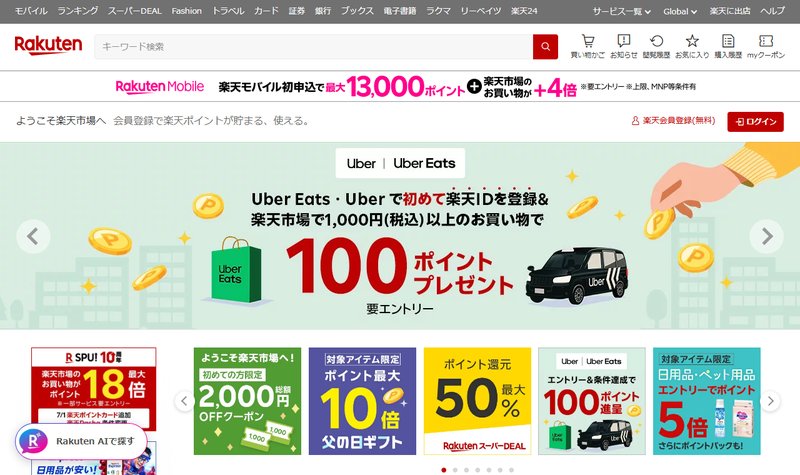
- Rakuten shopping & your Rakuten account (rakuten.co.jp): the everyday shopping site and points dashboard. A Japanese IP via NordVPN usually restores access cleanly.
- Rakuten Card management (rakuten-card.co.jp): credit card statements, payments and points — generally works with a Japanese IP via VPN. Bank-style 2FA may still kick in; have your registered method working.
- Rakuten Bank (rakuten-bank.co.jp): a full bank. Same fraud-detection caveats as MUFG or SMBC — don’t rotate servers, pre-register overseas access if Rakuten Bank offers it for your plan.
- Rakuten Pay / QR payments: tied to being physically in Japan with a Japanese phone. A VPN doesn’t make a QR payment work overseas.
- Rakuten TV (streaming): a separate, licence-based geo-block. A Japanese server unblocks viewing.
If you only remember one line: VPN helps with web access, not in-person QR payments.
The big Japanese banks — what to expect with NordVPN
I want to be careful here. Bank behaviour changes, and specific lockout patterns vary per account, plan and device. The following is the general shape based on each bank’s published help and expat community reports — your individual mileage will vary.
- MUFG (三菱UFJ): has a dedicated overseas service, Global Direct. Register before departure. A Japanese IP via NordVPN on top is a sensible belt-and-braces approach.
- SMBC (三井住友): offers Global Service for residents going abroad. Same pre-departure registration logic.
- Rakuten Bank: internet-first bank. Works with a stable Japanese IP, but bank-style fraud detection is in play — keep the VPN server consistent.
- Japan Post Bank (ゆうちょ): historically more conservative about overseas access. Read their published guidance before you travel and call ahead if you’re unsure.
- SBI / Sony Bank / JNB: internet banks tend to be more accessible from abroad than legacy banks, but the same VPN-stability and 2FA rules apply.
⚠️ Honest warning: none of this is a substitute for calling your bank before you leave and asking them what they recommend. Two minutes on the phone in Japan saves potential hours of unlocking from abroad.
“I connected to NordVPN Japan and the bank still won’t let me in” — troubleshooting
- Clear cookies / try a private window. Old location data is the most common silent failure.
- Don’t switch servers mid-session. If you’ve already started typing your credentials, finish or fully log out before changing IP.
- Use a desktop browser, not the phone app. GPS checks in mobile banking apps will defeat any VPN.
- Check your 2FA path. A code going to a dead Japanese number is the silent killer. Fix this before blaming the VPN.
- Try the official overseas service login flow instead. MUFG Global Direct / SMBC Global Service are designed exactly for this — they’re more permissive about overseas IPs.
- If repeatedly blocked, stop. Repeated failed VPN logins are how you trigger a full lock. Step back, call the bank, do not brute-force.
Is this legal? The careful version
Using a VPN is legal in Japan and in most countries. Logging into your own Japanese accounts from abroad to manage your own money is a normal personal-finance activity, not a crime.
Two honest caveats: services’ terms may not formally permit access via VPN from outside Japan, and banks specifically may flag it for fraud review. The realistic risk for an ordinary user is an account lock, not legal trouble — but as always, follow your bank’s actual guidance, not blog posts. (See Is Using a VPN Legal in Japan? for the full picture.)
Frequently asked questions
Will NordVPN let me log into MUFG / SMBC / Rakuten Bank from abroad?
It restores the Japanese IP that those services check, but banks add their own fraud-detection layer that can still flag overseas logins. The reliable combination is: official overseas service registered before departure + NordVPN for a stable Japanese IP + consistent server choice.
Why does NordVPN specifically over a cheaper VPN?
For banking, you want a large, stable Japanese network so you can use the same IP repeatedly. NordVPN’s 130+ Japanese servers give you that headroom. Smaller VPN networks force you to rotate, which is exactly what triggers bank flags.
Can I rotate servers between banking sessions?
Yes, sparingly. Within a single login session, keep the same server. Between sessions, occasional changes are normal; rapid hopping is what raises red flags.
What about Rakuten shopping vs Rakuten Bank?
Rakuten shopping (rakuten.co.jp) is forgiving — a Japanese IP via NordVPN usually just works. Rakuten Bank is, well, a bank — same fraud-detection rules as any other Japanese bank.
Does NordVPN log my banking traffic?
No. NordVPN’s no-logs policy has been independently audited multiple times. That said, your bank itself logs your login, which is normal and expected.
What if my phone is the only device I have?
Banking from a phone abroad is the hardest combination because of GPS checks in apps. Use the bank’s website via your phone’s browser (with VPN connected) rather than the app, or borrow a friend’s laptop for the rare session.
Japan-specific verdict
- For Rakuten shopping, points and account management → NordVPN with a stable Japanese server. Easy mode.
- For Japanese bank dashboards → official overseas service first (MUFG Global Direct, SMBC Global Service, etc.), with NordVPN as a careful supplement.
- For Rakuten Pay / in-person payments overseas → a VPN won’t help; plan another payment method.
Test it on the 30-day money-back guarantee while you’re still in Japan, sort out your bank’s official overseas service in parallel, and you’ll keep your Japanese financial life running from anywhere. 🇯🇵
Related guides
- Access Japanese Banks, Rakuten & Services from Abroad (overview)
- Best VPN for Japan (2026): the full ranked guide
- NordVPN review (from Japan)
- Is Using a VPN Legal in Japan?
Related Articles You Might Find Useful
If this guide was helpful, here are a few more from AI From Japan covering related topics:
- Can You Access Japanese Banks, Rakuten & Services from Abroad? (VPN Guide 2026)
- NordVPN vs ExpressVPN — Which Works Better in Japan? (2026)
- NordVPN Review for Japan 2026 — Honest Take After 14 Months from Kansai
- Best VPN for Japan 2026: Top 5 Picks for Expats, Travelers & Digital Nomads
About the author
I’m Ryuyan Kimura, a content blogger based in the Kansai region of Japan. I review AI tools, VPNs, and password managers for English-speaking expats and Japanese learners. Prices and pages in my guides are checked from my own connection in Osaka; performance and bank-specific points are drawn from independent sources, which I cite inline.
Want the full story? Read my About page or check our Editorial Standards.