Disclosure: This post contains affiliate links to VPN services (NordVPN, PrivateVPN, Surfshark). If you sign up through one of the links on this page, AI From Japan may earn a small commission at no additional cost to you. I only recommend VPNs I would be happy to use myself, and any prices mentioned were checked on the provider’s own page on May 27, 2026. Read our full Affiliate Disclosure for details on every program we participate in.
⚖️ Quick answer:
Yes — using a VPN is completely legal in Japan, for residents, expats and tourists alike. There’s no law restricting personal or business VPN use. The catch is simple: a VPN doesn’t make an otherwise-illegal act legal, and bypassing a site’s geo-block can still break that site’s terms of service (a contract issue, not a criminal one).
Below: exactly where the legal line sits, what stays illegal regardless, and how to use one responsibly.
Last Updated: May 28, 2026 · Written from Osaka by Ryuyan · I’m a blogger, not a lawyer — this is general info, not legal advice.
Just about every time I recommend a VPN to someone in Japan, the same nervous question comes back: “Wait — is that even legal here?” It’s a fair worry. Japan is famously strict about copyright, and nobody wants to accidentally land themselves in trouble over a streaming app.
So let me clear it up properly, because most English pages either hand-wave (“yeah it’s fine!”) or scare you for clicks. The honest answer has two halves: the tool and the activity. Get that distinction and everything else falls into place.
The short answer: VPNs are legal in Japan
As of 2026, there is no Japanese law banning or restricting VPN use for individuals or businesses. VPNs are mainstream privacy tools — companies use them for remote work, and ordinary people use them for security on public Wi-Fi. Connecting through a VPN, including to a Japanese server, is not in itself an offence (veepn, Cloudwards).
Unlike a handful of countries that restrict VPNs (China and Russia being the usual examples), Japan places no such limits. If you’re a tourist using one on hotel Wi-Fi, or a resident protecting your connection, you’re on completely normal ground.
The line that actually matters: the tool vs the activity
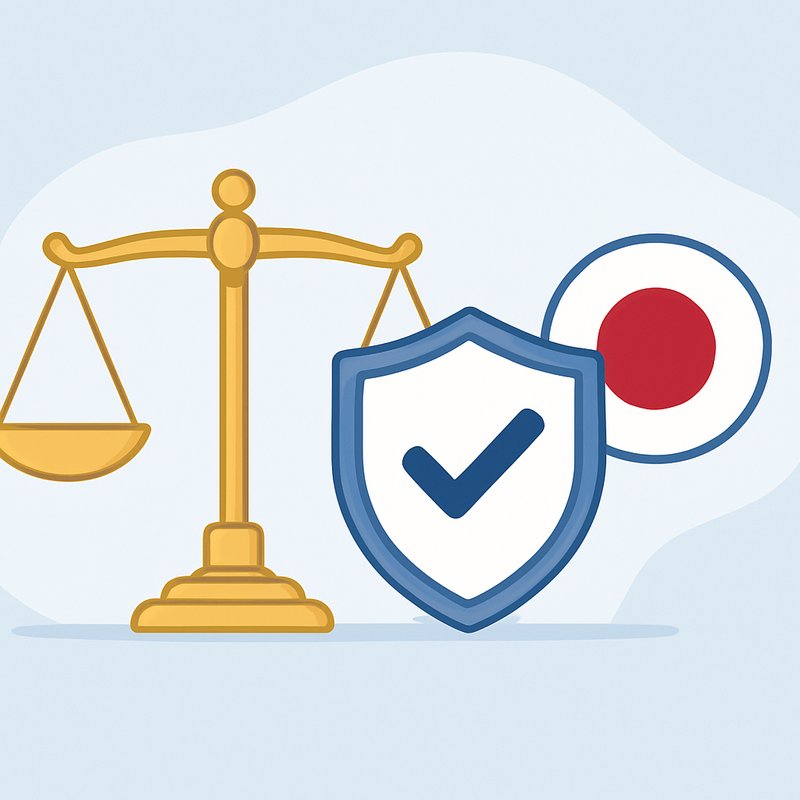
Here’s the principle to remember: a VPN never turns an illegal act into a legal one. Japanese law looks at what you actually do, not at the tool you route it through. So:
- ✅ Legal: protecting your privacy, accessing your own accounts, watching a service you’re entitled to.
- ❌ Illegal — with or without a VPN: downloading or sharing copyrighted material without permission.
And Japan is genuinely strict here. Illegally downloading copyrighted material can carry penalties reported as high as a ¥10 million fine and up to two years’ imprisonment (source). A VPN does nothing to change that — the act is the problem, not the tool.
The grey area: geo-blocks and terms of service
This is where most of the real confusion lives. Using a VPN to get a Japanese IP and reach a geo-blocked site — say, to read Japanese news abroad or watch ABEMA and TVer from overseas — is not a criminal act. But it may go against that service’s terms of service, because their content licences are often Japan-only.
The honest framing: that’s a contract matter between you and the service, not a crime. In practice, services respond by blocking VPN IP addresses, not by pursuing individual viewers — reports of ordinary users being penalised are very rare. Still, it’s their house rules, so be a respectful user.
Streaming: licensed vs pirated is the whole game
For streaming specifically, the dividing line is licensing:
- Watching a licensed service you can access (e.g. your own account, or a free Japanese service) via VPN → fine legally; at most a ToS question.
- Watching pirated or unlicensed streams → illegal, VPN or not. The VPN doesn’t launder it.
So the safe path is simple: stick to legitimate services. If you want the how-to for the legal ones, see my ABEMA & TVer guide and my Best VPN for Japan ranking.
What it means for you, specifically
- Tourists in Japan: totally fine to use a VPN for security on public Wi-Fi, or to reach your home-country services while travelling.
- Residents & expats in Japan: fine for privacy and for reaching home-country sites. For Japanese banking from abroad, see the caveats in my accessing-Japanese-services guide.
- Fans outside Japan: using a Japanese-IP VPN to view legitimate Japanese services is a ToS question, not a criminal one — just don’t touch pirated streams.
If you’ve decided you want one
Since a VPN is perfectly legal to use here, the only real question is which one. For Japan, what matters is reliable Japanese servers, speed and a no-logs policy. My all-round pick is NordVPN (largest Japanese network, audited no-logs), but I compare the field honestly in the Best VPN for Japan guide.
What a VPN does NOT make legal
To be crystal clear, because this is the responsible bit:
- ❌ Pirating films, manga, music or games — illegal, heavily penalised in Japan.
- ❌ Anything fraudulent, or impersonating someone else’s identity.
- ❌ Getting around payment or KYC rules on financial services.
A VPN is a privacy and access tool, not a shield for breaking the law. Used for legitimate purposes, it’s completely above board.
Frequently asked questions
Is it illegal to use a VPN in Japan?
No. There is no law restricting personal or business VPN use in Japan. The tool itself is legal.
Can I get in trouble for watching ABEMA or TVer abroad with a VPN?
It’s not a criminal matter. It may breach the service’s terms of service, but enforcement against individual viewers is very rare — services block VPN IPs rather than pursue users.
What about downloading with a VPN?
Downloading copyrighted material without permission is illegal in Japan whether or not you use a VPN, and penalties are severe. Don’t.
Are free VPNs legal too?
Legally yes, but many free VPNs log and sell your data, which undermines the point. If budget is the issue, see my Best VPN for Japan guide for trustworthy low-cost options.
Do tourists need a VPN in Japan?
Not required, but useful — for security on public Wi-Fi and for reaching your home-country services and banking while travelling.
The bottom line
Using a VPN in Japan is legal, full stop. Keep to legitimate services and your own accounts, never touch pirated content, and treat geo-block bypassing as a house-rules question rather than a legal one. Do that and you’ve got nothing to worry about.
Related guides
- Best VPN for Japan (2026): my full ranked guide
- How to Watch ABEMA & TVer Outside Japan
- Access Japanese Banks, Rakuten & Services from Abroad
- NordVPN review: is it worth it from Japan?
Related Articles You Might Find Useful
If this guide was helpful, here are a few more from AI From Japan covering related topics:
- Best VPN for Japan 2026: Top 5 Picks for Expats, Travelers & Digital Nomads
- NordVPN Review for Japan 2026 — Honest Take After 14 Months from Kansai
- Best Cheap VPN for Japan in 2026 (Budget Picks Tested)
- How to Watch ABEMA & TVer Outside Japan (with a VPN) in 2026
About the author
I’m Ryuyan Kimura, a content blogger based in the Kansai region of Japan. I review AI tools, VPNs, and password managers for English-speaking expats and Japanese learners. Prices and pages in my guides are checked from my own connection in Osaka; performance and legal points are drawn from independent sources, which I cite inline.
Want the full story? Read my About page or check our Editorial Standards.