Disclosure: This post contains affiliate links to VPN services (NordVPN, PrivateVPN, Surfshark). If you sign up through one of the links on this page, AI From Japan may earn a small commission at no additional cost to you. I only recommend VPNs I would be happy to use myself, and the prices shown were verified on each provider’s own pricing page on May 27, 2026. Read our full Affiliate Disclosure for details on every program we participate in.
📺 Quick answer (for people who just want to watch the sumo tonight):
ABEMA and TVer are locked to Japanese IP addresses. To watch them from abroad you need a VPN with reliable servers inside Japan. After comparing pricing, server coverage and independent unblocking tests, here’s my honest shortlist:
- Best all-rounder — NordVPN: the most Japan servers (Tokyo + Osaka) and the most consistent ABEMA/TVer unblocking in independent tests.
- Cheapest that actually works — PrivateVPN: roughly US$2/month on the long plan. Smaller network, but it holds a Japanese IP.
- Best for a whole household — Surfshark: unlimited devices from ¥308/month, so the whole family can watch on different screens.
All three offer a 30-day money-back guarantee, so you can test ABEMA/TVer access risk-free and get a refund if it doesn’t work for you.
Last Updated: May 27, 2026 · Written from Osaka by Ryuyan
I get this question more than almost any other. A friend moves from Osaka to London for work, or my cousin flies to Australia for a working holiday, and within a week the message arrives: “Ryuyan, I can’t watch ABEMA anymore. The sumo won’t load. Help.”
If you’ve left Japan — or you’re a fan of Japanese TV who has never lived here — you’ve probably hit the same wall. You open ABEMA or TVer (Japan’s two big free streaming services), press play, and instead of your drama you get an error message about your region.
The fix is a VPN, but most guides online are written by people who have never lived in Japan and just want you to click the most expensive link. I live in Osaka, so let me walk you through this the way I’d explain it to a mate over coffee: what actually blocks you, exactly how to get around it, which VPN is worth your yen, and the honest catches nobody mentions.
Why ABEMA and TVer don’t work outside Japan
Both services are free, and both are funded on the assumption that you’re watching from inside Japan. The reason isn’t that they dislike overseas fans — it’s broadcast licensing. When a network licenses an anime or a drama, the rights are usually sold country-by-country. ABEMA and TVer only hold the rights to stream that content in Japan, so they’re contractually required to block everyone else.
They enforce it by checking your IP address — the digital “return address” that reveals which country you’re connecting from. Connect from a Japanese IP and you’re in. Connect from anywhere else and you’re out.
What you actually see differs slightly between the two:
- TVer shows a clear message that the video is “restricted from playing in your current geographic region,” according to its own error screens documented by Comparitech.
- ABEMA is a little quieter about it — content simply fails to load, or you get a regional restriction notice. ABEMA also notes in its own help pages that VPN viewing is “outside the recommended environment,” which is a polite way of saying they try to block known VPN servers.
That last point matters, so I’ll come back to it: ABEMA can’t block every VPN — only the specific IP addresses it has spotted. That’s exactly why a VPN with lots of Japanese servers (so you can switch to a fresh one) beats a cheap VPN with only one or two.
How to watch ABEMA & TVer abroad in about 5 minutes
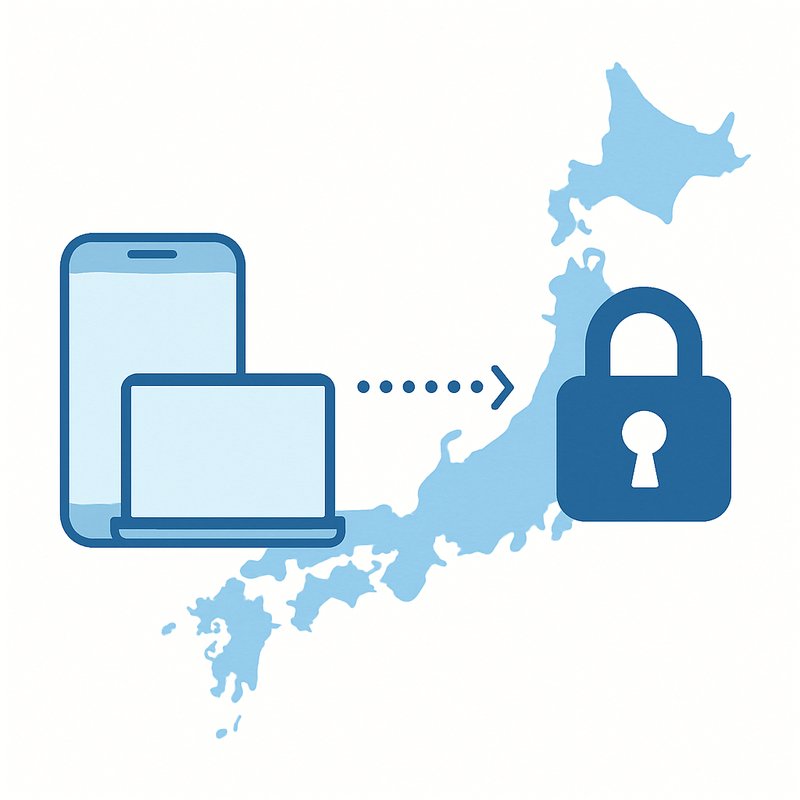
Here’s the whole process. It really is this short:
- Pick a VPN with Japanese servers. Not every VPN has them, and the free ones rarely work (more on that below). I’ll compare the three I’d trust in the next section.
- Install the app and log in. All three of my picks have apps for Windows, Mac, iPhone, Android, and Fire TV. Sign-up is advertised as a three-step process, and when I checked their pricing pages they all run a 30-day money-back guarantee — so this step is genuinely low-risk.
- Connect to a server in Japan. Search “Japan” in the app and connect to Tokyo or Osaka. Wait for it to say “Connected.”
- Clear your browser cookies (the step everyone skips). If you watched ABEMA/TVer before without a VPN, old cookies can leak your real location even after you connect. Clear them, or just open a private/incognito window. This single step fixes the majority of “my VPN isn’t working” complaints.
- Open ABEMA or TVer and press play. If it loads, you’re done. If it doesn’t, switch to a different Japanese server and try again.
The bit other guides miss: the app behaves differently from the browser
This is the part I never see covered properly, and it’s the source of a lot of frustration. ABEMA and TVer are not the same to unblock, and the device you use changes things.
TVer is primarily built around its mobile app for Japanese users, but the website works fine on a laptop. In practice, the browser version is usually the easier one to get working with a VPN, because you can clear cookies instantly and switch servers without the app caching your location. If the TVer app on your phone keeps failing even with the VPN on, try the website in a private browser tab instead — it’s a workaround a lot of people stumble onto eventually.
ABEMA works on both, but the mobile app can be stickier about location once it’s decided where you are. Toggling airplane mode after connecting the VPN, or reinstalling the app, clears that. On a laptop, ABEMA in a fresh browser window is the most reliable combination.
My honest rule of thumb for someone abroad: get it working in a laptop browser first (easiest to troubleshoot), then move to the phone or TV once you know your VPN server holds a Japanese IP.
Which VPN should you actually use?
There are dozens of “best VPN for ABEMA” lists out there, and most of them rank whichever VPN pays the most. I’d rather tell you which one fits your situation, because the right answer genuinely depends on what you care about. All three below are services I’d be comfortable recommending to my own family.
🥇 NordVPN — the safest bet for Japanese TV
If you just want the highest chance of ABEMA and TVer working on the first try, this is the one. NordVPN runs the largest Japanese server network of the three — independent guides count well over 80 servers across Tokyo and Osaka (BleepingComputer puts it at 130+) — which matters because if one server gets blocked, you just hop to the next. In independent unblocking tests it consistently handles ABEMA, TVer, NHK and Netflix Japan, and BleepingComputer’s speed testing clocked it around 196 Mbps, which is comfortably enough for 1080p.
When I checked NordVPN’s Japanese pricing page on June 11, 2026, the top “Complete” plan showed ¥690/month on the two-year term (with the first 27 months billed at ¥16,470, renewing at ¥34,680/year). Here’s the honest tip the sales page won’t shout: for streaming you don’t need the Complete plan. The cheaper Basic VPN tier (around ¥430–470/month per Japanese review sites) does everything ABEMA and TVer require — the extra antivirus and password-manager features don’t help you watch the sumo. It covers 10 devices and has a 30-day money-back guarantee.
💸 PrivateVPN — the cheapest one I’d trust
If money is the deciding factor — students, working-holiday folks, ESL learners on a budget — PrivateVPN is the one I point people to instead of a sketchy free app. Its network is much smaller than NordVPN’s, but it does keep servers in Japan, and independent reviewers list it among the VPNs that hold a Japanese IP for ABEMA and TVer.
The price is the headline. On its pricing page (checked May 27, 2026) the long 36-month plan works out to US$2.00/month (billed $72 every 12 months after the intro term), the 3-month plan is $6.00/month, and month-to-month is $9.90. At today’s exchange rate that long plan is roughly ¥300/month — genuinely cheap. It covers 10 devices and, like the others, has a 30-day money-back guarantee. The trade-off is fewer servers, so if one Japanese server is blocked you have fewer fallbacks — but for the price, it’s a fair deal.
👨👩👧 Surfshark — best if the whole family watches
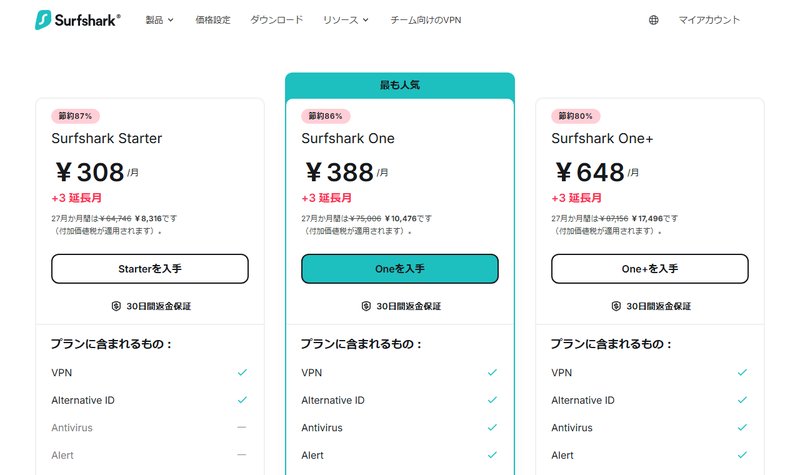
Surfshark’s party trick is unlimited simultaneous devices on one subscription. If you’re a household abroad — kids watching anime on a tablet, partner on the TV, you on the laptop — this is the value pick. When I checked its Japanese pricing page (May 27, 2026), the 24-month Starter plan was ¥308/month (87% off, billed ¥8,316 for the first 27 months) and the “Surfshark One” bundle ¥388/month. Independent testing has it unblocking ABEMA and Netflix Japan, with BleepingComputer measuring around 188 Mbps. 30-day money-back guarantee, same as the others.
At-a-glance scorecard
| Criteria (out of 5) | NordVPN | PrivateVPN | Surfshark |
|---|---|---|---|
| Japan server coverage | ★★★★★ | ★★★☆☆ | ★★★★☆ |
| ABEMA/TVer reliability | ★★★★★ | ★★★★☆ | ★★★★☆ |
| Speed (1080p+) | ★★★★★ | ★★★★☆ | ★★★★☆ |
| Value for money | ★★★★☆ | ★★★★★ | ★★★★★ |
| Ease for beginners | ★★★★★ | ★★★★☆ | ★★★★☆ |
Can’t I just use a free VPN?
You can try, and I understand the temptation — but I’d genuinely steer you away, and not because I want you to spend money. Here’s the honest reasoning:
- Free VPNs rarely keep working Japanese servers. Japan servers are in high demand; free providers either don’t offer them or share a tiny pool of IPs that ABEMA and TVer have long since blocked.
- They’re slow. Free servers are overcrowded, so even if you get in, you’re looking at buffering instead of the 1080p you came for.
- The “free” often means you’re the product. Several free VPNs fund themselves by logging and selling browsing data — the exact opposite of what a VPN is for.
If budget is the issue, the honest move is PrivateVPN’s long plan at ~US$2/month, or use a paid VPN’s 30-day money-back guarantee — watch what you need, then cancel within the window if you really only wanted it for a one-off.
“My VPN is on but it still won’t play” — troubleshooting
If you’ve connected to a Japanese server and ABEMA/TVer still block you, work down this list in order. These are the fixes that independent guides and Japan-resident users report most often:
- Clear cookies / use a private window. The number-one cause. Old location data overrides your new Japanese IP.
- Switch to a different Japanese server. The one you’re on may be a known, blocked IP. This is where a big network (NordVPN) pays off — just pick another Tokyo or Osaka server.
- Restart the app or toggle airplane mode (mobile) so the streaming app re-checks your location.
- Avoid old protocols like PPTP. Use the app’s default (WireGuard/NordLynx or OpenVPN). Outdated protocols can leak your real location.
- Try the browser instead of the app, as covered above — especially for TVer.
Is this legal? The honest answer
I’m not a lawyer, so I’ll keep this factual rather than give you false certainty. Two separate things are often confused here:
- Using a VPN is legal in Japan and in most countries. VPNs are mainstream privacy tools used by businesses and individuals every day. (A handful of countries like China and Russia restrict them — check your local rules if you’re somewhere like that.)
- Watching geo-blocked content via VPN can go against ABEMA’s or TVer’s terms of service. Their licences are Japan-only, so streaming from abroad is something their terms don’t permit.
In practice, as multiple VPN guides note, reports of individual users being banned for VPN use are extremely rare — services respond by blocking VPN IP addresses, not by punishing viewers. So the realistic risk isn’t a ban; it’s that a particular server stops working and you switch to another. I’d just say: be a respectful fan, and if a service ever offers a legit overseas option, use that.
So what’s actually worth watching?
Quick tour for anyone who hasn’t used these, because “get a VPN” is pointless if you don’t know what you’re unlocking:
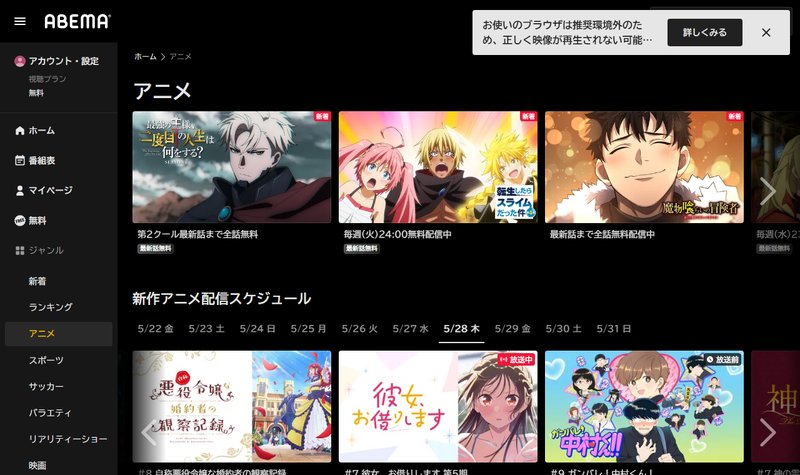
- ABEMA is the one I’d prioritise for live sport and original content. Its big draw for a lot of fans is sumo (大相撲, ōzumō — Japan’s national wrestling): ABEMA carries some of the most complete free coverage of the tournaments, bout by bout. Beyond that it’s strong on news, anime, original dramas and reality shows. The base tier is free.
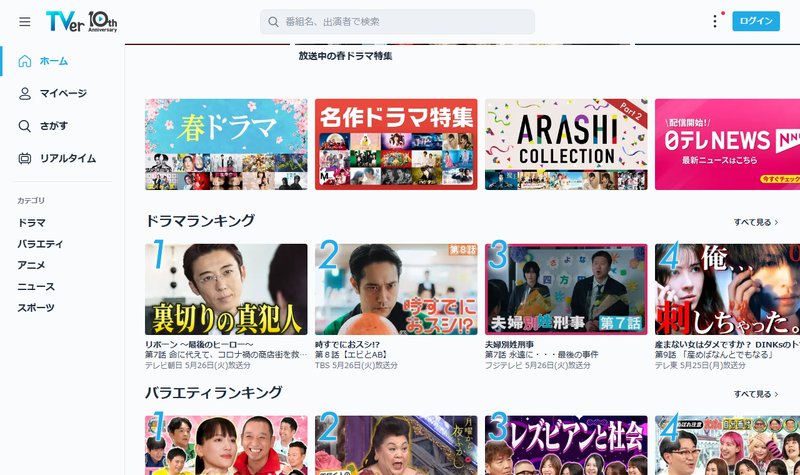
- TVer is the catch-up service for Japan’s commercial networks — think of it as the place to watch the dramas (dorama) and variety shows that just aired on Japanese TV, free and on-demand. When I opened it today it was running a “classic drama” feature with shows like Ossan’s Love and dozens of others. If you’re an ESL learner using J-drama to study, TVer is gold.
Frequently asked questions
Why does ABEMA work in Japan but not abroad?
Because it checks your IP address. From Japan you have a Japanese IP, so it lets you in. From overseas your IP gives away your country and ABEMA blocks you to comply with its Japan-only broadcast licences.
Will any VPN unblock ABEMA and TVer?
No. You specifically need a VPN with working servers inside Japan, and ideally several of them so you can switch if one is blocked. That’s why I recommend NordVPN (largest Japanese network), with PrivateVPN and Surfshark as solid alternatives.
Do I need to pay, or is there a free way?
There’s no reliable free way that I’d honestly recommend — free VPNs rarely hold Japanese servers and are slow. The closest to “free” is using a paid VPN’s 30-day money-back guarantee, or PrivateVPN’s ~US$2/month long plan.
It connected to Japan but still won’t play. Why?
Almost always old cookies leaking your real location — clear them or use a private window. If that fails, switch to a different Japanese server. See the troubleshooting section above for the full list.
Can I watch on my phone and my TV?
Yes. NordVPN and PrivateVPN both cover 10 devices; Surfshark allows unlimited devices, which is the best choice if a whole household abroad wants to watch on different screens at once.
Is it safe to put my payment details into a VPN?
The three I recommend are established, audited providers, and all offer a 30-day money-back guarantee. As always, enter payment details yourself on the official site — never hand them to anyone, including a “helpful” guide.
Japan-specific verdict
Here’s how I’d actually decide if you asked me in person:
- You want the least hassle and the best odds it just works → NordVPN. Most Japanese servers, most reliable unblocking. If you only read one recommendation, read this one.
- You’re on a tight budget → PrivateVPN at ~US$2/month.
- A whole household abroad needs access → Surfshark for unlimited devices.
Whichever you pick, the 30-day money-back guarantee means you can test ABEMA and TVer access tonight and get your money back if it doesn’t fit. Start there, clear your cookies, connect to Tokyo, and go watch your sumo. 🇯🇵
Related guides
- Best VPN for Japan (2026): my full ranked guide
- NordVPN review: is it worth it from Japan?
- Surfshark review: the unlimited-devices VPN tested
- NordVPN vs ExpressVPN: which wins in Japan?
Related Articles You Might Find Useful
If this guide was helpful, here are a few more from AI From Japan covering related topics:
- How to Watch Japanese Sports Abroad: Sumo, Baseball & More (VPN)
- Can You Access Japanese Banks, Rakuten & Services from Abroad? (VPN Guide 2026)
- Best VPN for Japan 2026: Top 5 Picks for Expats, Travelers & Digital Nomads
- NordVPN Review for Japan 2026 — Honest Take After 14 Months from Kansai
About the author
I’m Ryuyan Kimura, a content blogger based in the Kansai region of Japan. I review AI tools, VPNs, and password managers for English-speaking expats and Japanese learners. Prices and app interfaces in this guide were checked from my own connection in Osaka; unblocking and speed claims are sourced from independent testing labs and Japan-resident reports, which I cite inline.
Want the full story? Read my About page or check our Editorial Standards for how we test products.