Last Updated: July 10, 2026
Somewhere around chapter 4 of Genki, every Japanese learner has the same thought: “Wait — why am I paying for a tutor when ChatGPT is right here, free, and never tired of my questions?”
It’s a fair question, and most answers online come from people selling you one side or the other. I’m going to give you the honest version. I use ChatGPT every day from Osaka — for work, for translation cross-checks, and yes, for Japanese — and I’ve also sat through my share of human lessons. Here’s what AI genuinely does better, where it quietly fails you, and the setup that actually works.
⚡ The honest 30-second answer
- ChatGPT is the best free Japanese study companion ever made. Grammar explanations, corrections, unlimited example sentences — it’s genuinely brilliant.
- It is a poor replacement for a human tutor if your goal is speaking. No real pronunciation feedback, shaky nuance, zero accountability.
- The winning setup: textbook + ChatGPT for daily grind + a human tutor for speaking. Companion, not replacement.
- And honestly — if you only want to read Japanese, you may not need a tutor at all.
Disclosure: This post contains affiliate links. If you make a purchase through one of the links on this page, AI From Japan may earn a small commission at no additional cost to you. I test products hands-on from Kansai wherever I can; for anything I can’t verify myself, I rely on independent sources — and I say so in the article. Read our full Affiliate Disclosure for details.
What ChatGPT is genuinely great at (with the exact prompts)
Let’s give the robot its due. These are the five things I actually use it for, with the prompts — copy them straight into ChatGPT and you’ll see why learners are obsessed:
1. Grammar explanations that are clearer than your textbook.
Prompt: “Explain the difference between は and が like I’m a beginner, with 5 example sentences and English translations.”
Textbooks often bury this stuff in academic language. ChatGPT explains it three different ways until one clicks — at 2 a.m., for free, without judging you for asking a fourth time.
2. Correcting your writing.
Prompt: “Correct this Japanese diary entry. Show my mistakes in a table with the reason for each correction: [your text]”
This is the single highest-value use. Daily journaling with corrections used to be exactly what you paid a tutor for.
3. Unlimited drilling of a weak point.
Prompt: “Make me 10 fill-in-the-blank questions practicing て-form. Wait for my answers, then grade them.”
A textbook has 12 exercises per grammar point. ChatGPT has infinity.
4. Text-based roleplay.
Prompt: “Roleplay as an izakaya (Japanese-style pub) staff member. Speak casual Japanese, one line at a time, and correct my replies as we go.”
Genuinely useful rehearsal before real-life situations — I’ve used this exact one before a first konbini-style exchange went smoother.
5. Reading practice at your exact level.
Prompt: “Write a 200-word story in Japanese using only JLPT N4 grammar and vocabulary, then quiz me on it.”
Graded readers cost money and run out. This doesn’t.
If you want the full toolkit beyond ChatGPT, I rounded up the best AI apps for learning Japanese separately — but ChatGPT alone covers a shocking amount of ground for ¥0.

Where ChatGPT quietly fails you
Now the part the AI-hype crowd skips. These aren’t nitpicks — they’re exactly the gaps a human tutor fills, and they’re confirmed by every serious review I’ve seen, including from Japanese language schools like Coto Academy:
- It makes mistakes — confidently. ChatGPT sometimes produces unnatural phrasing or subtly wrong Japanese, and it presents errors with the same confident tone as correct answers. A beginner can’t tell the difference. That’s the dangerous part: you don’t know what you don’t know.
- No real pronunciation feedback. Even in voice mode, it won’t reliably catch that your ちゅ sounds like つ or that your pitch accent makes 橋 (bridge) sound like 箸 (chopsticks). A human hears it in two seconds.
- Keigo and cultural nuance are shaky. Politeness in Japanese isn’t a grammar table — it’s reading the room. Timing, tone, when to soften a refusal: this is exactly what AI handles inconsistently and what living here forces you to learn.
- Real conversation has a clock. In a live exchange you have about a second to respond. Typing at your leisure trains a completely different skill. Language schools consistently report that speaking improves faster with real human feedback than with AI-only practice — and my own experience says the same.
- Zero accountability. ChatGPT never notices you skipped a week. A booked lesson with a human you’d have to cancel? That’s half the reason people actually keep studying.
So… can it replace a tutor? The honest verdict
If your goal includes speaking Japanese: no. Not because ChatGPT is bad — because speaking is a physical, social skill, and you can’t learn it from something that can’t hear you struggle and doesn’t care if you quit.
But here’s the honest flip side: not everyone needs a tutor. If your goal is reading manga, novels, or documentation — comprehension, not conversation — a textbook plus ChatGPT plus sheer volume of reading can genuinely take you there without spending a yen on lessons. I know that’s an odd thing to say in an article with tutor links in it, but it’s the truth, and you deserve the version of this answer that isn’t optimized to sell you something.
The setup that actually works (and what it costs)
For learners who do want to speak, the combination beats either extreme:
| Layer | Tool | Rough cost |
|---|---|---|
| Structure | A real textbook (Genki, Tobira or Minna — compared here) | ¥3,000–5,000 once |
| Daily grind | ChatGPT (drills, corrections, roleplay — the prompts above) | Free |
| Speaking | 1–2 human lessons a week — community tutors on italki (affiliate link) are the budget-friendly way in | A few thousand yen/week |
The magic trick: use ChatGPT to prepare for your human lessons. Drill the chapter’s grammar with AI all week, then spend your paid 60 minutes actually talking — not reviewing what a robot could have explained for free. Your tutor money goes exactly where only a human adds value. I compared the main tutoring platforms (italki, Preply and others, including honest downsides) in my guide to the best online Japanese tutors.
Try a trial lesson on italki — bring your ChatGPT notes →
(affiliate link)
Japan-side note: what I see actually working here
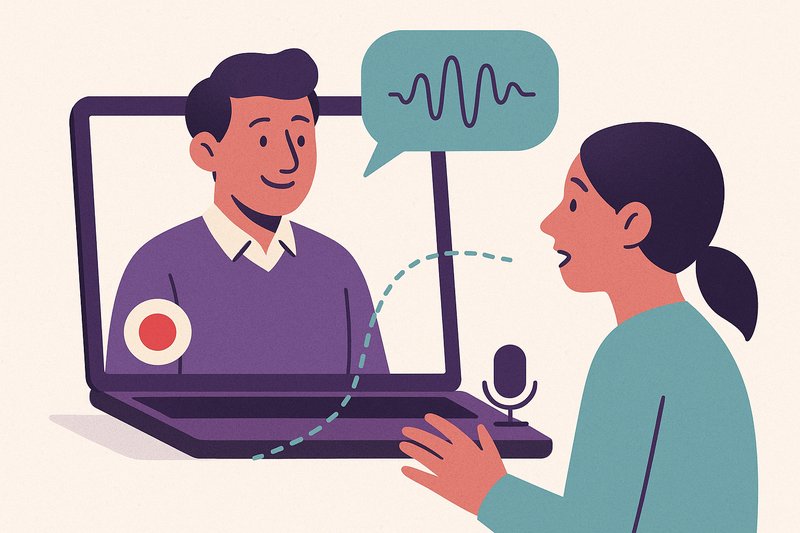
Living in Kansai, I meet a lot of foreigners learning Japanese, and the pattern is consistent: the ones who improve fastest treat AI as a multiplier, not a teacher. They show up to conversation practice — a tutor, a language exchange, the obaachan (grandmother) at their local cafe — having already drilled the vocabulary with ChatGPT. The ones who stall are usually the ones who’ve been “talking” to an AI for a year and freeze the first time a station attendant answers at full speed.
One more practical tip: ChatGPT is also handy as a translation cross-checker — though for that specific job I usually reach for DeepL first; I broke down which translates Japanese better in this comparison.
Frequently asked questions
Is ChatGPT good enough to learn Japanese for free?
For grammar, reading and writing practice — genuinely yes, especially combined with a textbook. For speaking and pronunciation, no. Decide which goal is yours before deciding what to pay for.
Does ChatGPT make mistakes in Japanese?
Yes — occasionally unnatural phrasing or subtle grammar errors, delivered with full confidence. The more advanced you get, the more you’ll catch. Treat it as a very well-read study buddy, not a native authority.
Can ChatGPT teach me pronunciation or pitch accent?
Not reliably. Even voice mode won’t consistently catch pitch-accent errors or subtle mispronunciations. This is the clearest single reason human feedback still matters.
Is a paid AI plan worth it for Japanese study?
The free tier covers everything in this article. A paid plan buys you longer conversations and fewer limits, not better Japanese. I’d spend that money on a human lesson instead.
ChatGPT vs italki — which should I pick on a tight budget?
Both, honestly — because one of them is free. Use ChatGPT daily at ¥0, and put whatever budget you have into occasional human speaking practice rather than an AI subscription.
What’s the single best ChatGPT prompt for Japanese learners?
The diary-correction one: “Correct this Japanese text. Show my mistakes in a table with the reason for each correction.” Write three sentences about your day, every day, and have it corrected. Cheapest fluency-per-minute deal in existence.
About the author
I’m Ryuyan Kimura, a content blogger based in the Kansai region of Japan. I’ve been reviewing AI tools, VPNs, and password managers for English-speaking expats and Japanese learners since AI From Japan launched. I test products hands-on from real Japanese networks in Kansai (NURO Hikari fiber + ahamo / SoftBank mobile) wherever I can; long-term performance claims are backed by independent tests and real user reports.
Want the full story? Read my About page or check our Editorial Standards for how we test products.
Related Articles You Might Find Useful
Building your Japanese study stack? These go deeper on each layer:
- italki vs Preply vs JapanesePod101 (2026) — Should You Pay for a Person or a Curriculum?
- Shin Kanzen Master vs Sou Matome vs TRY! — Best JLPT N3 Books (2026)
- italki Review for Japanese (2026): A Native Speaker’s Honest Take
- Best Online Japanese Tutors in 2026 — Honest Picks from a Kansai Local
- Genki vs Tobira vs Minna no Nihongo — Best Japanese Textbook in 2026
- Best AI Tools & Apps for Learning Japanese in 2026
- DeepL vs ChatGPT for Japanese Translation — Honest Verdict